2026 Best Ni Powder Guide for Quality and Applications?
In the world of advanced materials, Ni Powder stands out for its unique properties and diverse applications. This guide serves as an essential resource for those interested in high-quality nickel powder. Ni Powder is a critical component in various industries, from electronics to battery production.
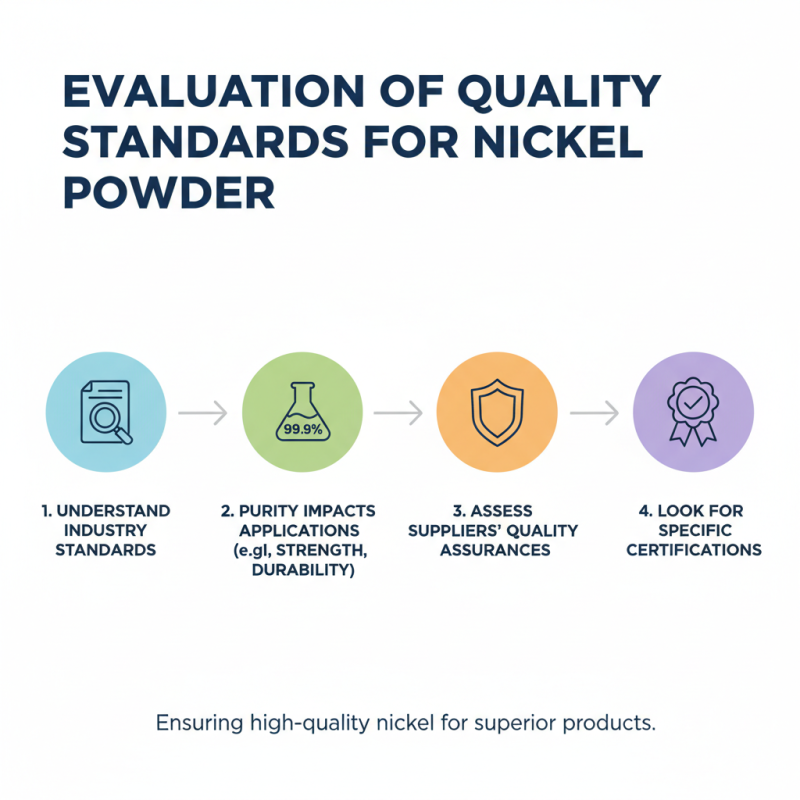
Nickel powder's exceptional characteristics, such as high corrosion resistance and excellent conductivity, make it invaluable. However, not all Ni Powder is created equal. Quality can vary significantly between suppliers, impacting its performance in specific applications. Buyers must navigate these differences carefully to ensure they select the right product.
Understanding the production methods and specifications of Ni Powder is crucial. Researching suppliers and their certifications can aid in making informed choices. It is also wise to consider how different grades of Ni Powder suit particular uses. Reflecting on these factors will help in achieving optimal results in your projects.

Overview of Nickel Powder (Ni Powder) and Its Characteristics
Nickel powder (Ni powder) stands out due to its unique characteristics and wide applications. This fine metal powder is valued for its excellent corrosion resistance and high thermal stability. Industries often utilize Ni powder in additive manufacturing and powder metallurgy. These features make it essential for creating components that require strength and durability.
The production process of nickel powder can influence its properties significantly. Techniques like atomization and carbonyl methods lead to different particle sizes and shapes. These variations can affect the powder's performance in applications. Understanding the specific characteristics of nickel powder is critical to achieving desired results in manufacturing. Experimentation may be needed to optimize performance, as not all Ni powders will suit every application.
Nickel powder also faces challenges. Its tendency to oxidize requires careful handling during storage and processing. This means ensuring an inert atmosphere or protective coatings. Users must also consider contamination risks, which can affect the properties of the final products. Awareness of these factors is vital for those working with Ni powder, leading to more informed decisions.
Types of Nickel Powder and Their Unique Properties
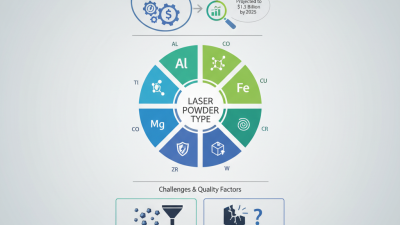
Nickel powder comes in various forms, each exhibiting unique properties that cater to specific applications. Atomized nickel powder is a popular choice due to its uniform particle size. This version is ideal for 3D printing and powder metallurgy. The controlled manufacturing process ensures consistency, making it reliable for high-performance components.
Another variant is electrolytic nickel powder. It’s known for its excellent purity and fine particle structure. This type finds its niche in the electronics industry. Its application in conductive pastes enhances the performance of electronic devices. However, the production can be energy-intensive, raising concerns about sustainability.
The pros and cons of different nickel powders present a dilemma. While atomized powder is widely used, it may not suit every application. On the other hand, electrolytic nickel powder’s high purity comes at a cost. Developing new methods for production could alleviate some of these challenges. Research and innovation are needed to improve accessibility and reduce environmental impacts.
2026 Nickel Powder Types and Unique Properties
This chart illustrates the particle sizes of different types of nickel powder, demonstrating their unique properties and applications in various industries. The conventional nickel powder typically has a particle size of about 5 µm, while atomized nickel shows a particle size of around 10 µm. In contrast, carbonyl nickel powder is much finer, with a particle size of only 0.1 µm, and spherical nickel powder has a larger size of about 20 µm.
Key Applications of Nickel Powder in Various Industries
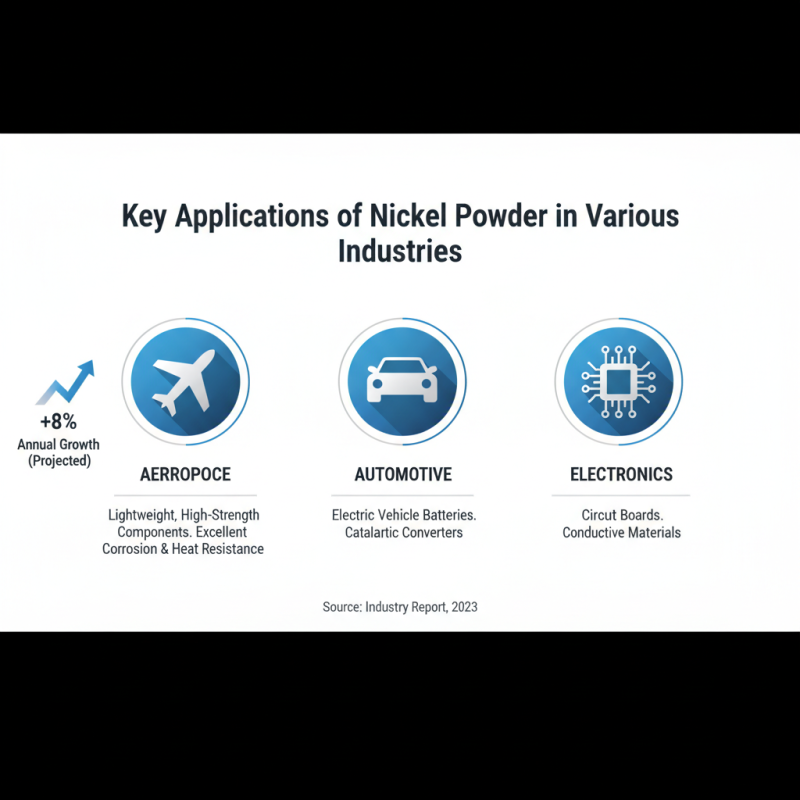
Nickel powder plays a vital role in several industries, including aerospace, automotive, and electronics. In aerospace, nickel powder contributes to manufacturing lightweight, high-strength components. It provides excellent resistance to corrosion and heat. According to a recent industry report, the aerospace sector is projected to increase its use of nickel powder by approximately 8% annually over the next five years.
In the automotive industry, nickel powder is crucial for producing catalysts and batteries. As electric vehicles gain popularity, the demand for nickel powder is expected to rise. A study indicates that nickel's share in battery production could reach 30%, driven by the need for higher energy density. Additionally, nickel's recyclability adds to its appeal.
The electronics industry also benefits from nickel powder. It serves in circuit boards and magnetic materials. However, the challenge remains in ensuring consistent quality and performance. Manufacturers often struggle with variation in powder characteristics. These discrepancies can lead to product defects and increased costs. Addressing these issues is essential for maintaining industry standards and trust.
Future Trends and Innovations in Nickel Powder Production
The nickel powder industry is witnessing a rapid evolution, driven by innovative production techniques. Recent reports indicate that global demand for nickel powder is projected to reach 60,000 metric tons by 2026. This surge is largely due to its applications in battery technology and additive manufacturing. In particular, the rise of electric vehicles (EVs) is a dominant force shaping this market. With EV sales expected to increase by 30% annually, the need for high-quality nickel powder is paramount.
Recent advancements focus on refining production methods to improve powder quality. Techniques such as gas atomization and hydrometallurgical processes are gaining attention. These methods enhance particle uniformity and reduce contaminants. However, challenges remain. The environmental impact of nickel extraction remains a concern. There is a pressing need for sustainable practices. Reports show that only 15% of nickel production currently adheres to stringent environmental standards.
Industry leaders recognize this gap and are investing in research to mitigate these issues. Innovative recycling methods are crucial for creating a circular economy in the nickel powder sector. Collaborations between manufacturers and researchers are essential for developing eco-friendly solutions. As trends evolve, enhanced regulatory measures could further dictate production standards. This dynamic landscape reflects a balance between quality enhancement and sustainability challenges.
2026 Best Ni Powder Guide for Quality and Applications
| Property |
Value |
Applications |
Future Trends |
| Purity |
99.9% |
Batteries |
Increased demand for EVs |
| Particle Size |
10-100 µm |
Catalysts |
Nano-powder developments |
| Production Method |
Atomization |
Additive manufacturing |
Green production techniques |
| Specific Surface Area |
20 m²/g |
Coatings |
Surface modification technology |
| Bulk Density |
3.5 g/cm³ |
Fuel cells |
Advanced sintering techniques |