Choosing reliable suppliers requires more than scanning a ranking. This guide, “China Top 10 Powder Alloys Manufacturers for Global Buyers,” examines manufacturers through practical purchasing criteria. These include product consistency, alloy expertise, production capacity, quality systems, and export experience.
Powder Alloys support demanding applications in additive manufacturing, thermal spraying, aerospace components, medical devices, tooling, and advanced research. Buyers should examine particle-size distribution, powder morphology, oxygen levels, flowability, chemical composition, and batch-to-batch stability. A polished product page is not enough. Request current technical data sheets, inspection reports, and representative samples before making a decision.
Look for manufacturers with controlled atomization processes, documented traceability, and responsive technical teams. Independent testing can confirm whether a powder meets the stated specification. Ask how rejected batches are handled. Ask about packaging, moisture protection, lead times, and after-sales support. Small details matter.
No ranking can fit every buyer.
A supplier serving titanium powder may not suit nickel-based superalloys or cobalt-chrome applications. Minimum order quantities, customization limits, and regional compliance requirements can also change the final choice. Some companies communicate well but provide limited evidence. Others offer strong documentation yet need improvement in delivery updates. That gap deserves attention.
This introduction presents a careful starting point for global buyers. It does not replace factory audits, sample evaluation, or contract review. The strongest decision combines verified evidence, application knowledge, and realistic expectations. Manufacturers are assessed for capability and reliability, not simply market visibility.

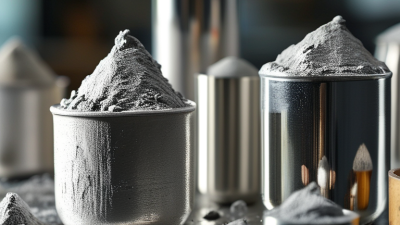
Powder alloys are engineered metal powders made by combining elements such as iron, nickel, cobalt, copper, or chromium. Manufacturers atomize molten metal into controlled particles, then classify the powder by size and shape. These powders support powder metallurgy, additive manufacturing, thermal spraying, brazing, and specialized coating processes.
Global buyers need them because powder form improves material efficiency and design flexibility. A factory can press powder into a near-net-shape gear, reducing machining waste. Fine spherical particles can also flow smoothly through an additive manufacturing system. In high-temperature applications, nickel or cobalt alloys may resist oxidation, wear, and repeated thermal stress. The correct grade still depends on the final part, not simply its chemical label.
When evaluating China’s top ten powder alloy manufacturers, buyers should request particle-size distribution, apparent density, tap density, oxygen content, and batch traceability. Certificates should match the required international specification and testing method. Packaging also matters. Moisture-barrier bags, sealed drums, and clear lot numbers protect powder during long-distance transport. Ask for sample testing before placing a large order.
Price can be misleading.
A lower quote may hide inconsistent particle shapes or weak quality control. Even experienced purchasers sometimes overlook powder flow behavior. That mistake can cause uneven feeding, porosity, or rejected components. Technical communication should cover equipment type, sintering temperature, layer thickness, storage conditions, and intended service environment. No powder is universally best, and supplier claims should be checked against independent test results.
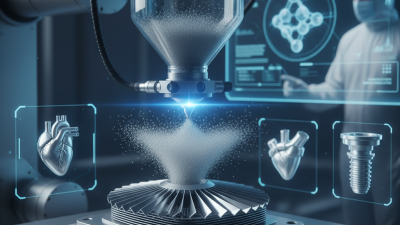
Evaluating China’s powder alloy manufacturers requires more than comparing online prices. Check the factory’s production history, technical team, and equipment condition. A reliable supplier should explain powder composition, particle-size distribution, flowability, density, and oxygen levels clearly. Ask for recent test reports from each production batch, not one impressive sample.
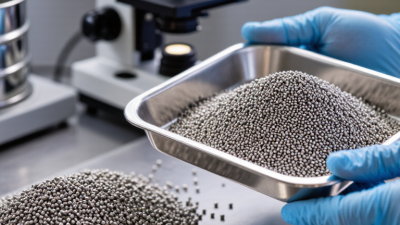
Request a small trial order before discussing large volumes. Examine the powder under consistent lighting and record color, texture, moisture, and packaging quality. Review certificates, calibration records, and material traceability from raw alloy to final shipment. An on-site or video audit should include mixing rooms, sieving systems, laboratory instruments, and storage areas. A polished factory tour can still hide weak controls.
Evaluate how the manufacturer handles problems. Ask for a written response process for off-specification powder, delayed delivery, or damaged packaging. Clear answers matter more than fast promises. Confirm minimum order quantities, lead times, inspection costs, and export documents in writing. Technical communication also reveals expertise; vague replies may create costly misunderstandings later. One limitation deserves attention: test results can vary between laboratories, so independent verification is often worthwhile. Price should remain part of the decision, but unusually low prices may reflect thinner quality control, inconsistent raw materials, or limited testing capacity.
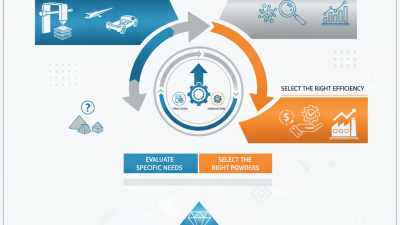
This buyer-oriented evaluation model uses a 100-point weighting system. Quality certification, powder metallurgy capability, material range, and testing evidence receive the highest weights because they directly influence alloy consistency, application performance, and supply reliability. Buyers should verify each item through current certificates, test reports, samples, audits, and written quotations.
The percentages represent suggested evaluation priorities rather than rankings or performance data for any specific company.
China Top 10 Powder Alloy Manufacturers for Global Buyers?
China’s top ten powder alloy manufacturers are better compared by product strengths, not by factory size. Some focus on gas-atomized powders for additive manufacturing and complex aerospace parts. Others specialize in water-atomized iron powders for press-and-sinter components. Nickel, cobalt, copper, titanium, and wear-resistant alloys cover different production needs. Practical buyers should review particle shape, size distribution, oxygen content, tap density, and batch consistency. These details affect flowability, melting behavior, and final part quality.
Several manufacturers stand out through vacuum melting, advanced atomization, and controlled heat treatment. Strong suppliers usually provide inspection reports, lot traceability, sample testing, and technical support. Powder for thermal spraying may require different morphology from powder used in laser processing. A supplier with excellent stainless steel powder may not perform equally well with nickel superalloys. No ranking is perfect. Performance depends on equipment, application, and quality control at the time of purchase.
Tips: Request a small trial batch before signing a large contract. Check sieve data, microscopy images, oxygen levels, and packing protection. Ask how rejected lots are handled. Factory visits can reveal storage conditions that documents hide. Also compare delivery stability, communication speed, and technical response. A low price can become expensive when powder causes clogged nozzles, weak bonding, or inconsistent density. Tensile results alone are not enough; process validation remains essential.
| Rank | Anonymized Manufacturer Profile | Primary Alloy Strength | Typical Powder Route | Typical Particle-Size Range | Key Product Advantages | Common Applications | Relevant Quality Controls |
|---|---|---|---|---|---|---|---|
| 1 | Profile A | Gas-atomized stainless steel and nickel-based powders | Inert-gas atomization | 15–53 μm for additive manufacturing; 45–150 μm for thermal spray | Spherical morphology, good flowability, low satellite content, and controlled oxygen levels | Metal 3D printing, aerospace repair, medical components, and tooling | Chemical composition, apparent density, Hall flow, tap density, morphology, and oxygen analysis |
| 2 | Profile B | Water-atomized iron, low-alloy steel, and stainless steel powders | Water atomization followed by screening and annealing | 45–180 μm for pressing and sintering | Cost-efficient large-volume production, irregular particle shape, and strong compressibility | Powder metallurgy gears, bushings, structural parts, and friction components | Particle-size distribution, flow rate, compressibility, green strength, and sintered density |
| 3 | Profile C | Aluminum, aluminum-silicon, and precipitation-hardening aluminum alloys | Inert-gas atomization | 15–63 μm for powder-bed fusion; 45–125 μm for cold spray | Low density, high specific strength, spherical particles, and suitability for lightweight designs | Automotive parts, aerospace structures, heat exchangers, and lightweight prototypes | Hydrogen and oxygen content, flowability, density, particle morphology, and alloy chemistry |
| 4 | Profile D | Nickel-based superalloys and heat-resistant alloy powders | Vacuum or inert-gas atomization | 15–53 μm for additive manufacturing; 45–106 μm for spray processes | High-temperature strength, oxidation resistance, and controlled chemistry for demanding environments | Turbine components, combustion hardware, chemical-processing equipment, and hot-work tooling | Trace-element control, oxygen and nitrogen testing, phase analysis, and powder-bed consistency |
| 5 | Profile E | Titanium and titanium-alloy powders | Plasma atomization, plasma rotating-electrode processing, or inert-gas atomization | 15–63 μm for powder-bed fusion; 45–150 μm for spray applications | High strength-to-weight ratio, corrosion resistance, and biocompatibility options | Aerospace parts, orthopedic implants, dental components, and chemical equipment | Interstitial elements, oxygen, nitrogen, hydrogen, particle shape, and contamination control |
| 6 | Profile F | Cobalt-based alloys and wear-resistant alloy powders | Gas atomization and water atomization | 20–63 μm for additive manufacturing; 45–150 μm for hardfacing | Excellent wear, corrosion, and elevated-temperature resistance | Valve seats, cutting tools, dental components, and industrial hardfacing | Hardness, carbide distribution, chemical composition, particle-size distribution, and flowability |
| 7 | Profile G | Copper, bronze, brass, and copper-based alloy powders | Water atomization, gas atomization, and electrolytic production | 20–180 μm depending on pressing, brazing, or additive-manufacturing use | High thermal and electrical conductivity with a wide range of sintering behavior | Electrical contacts, filters, friction parts, brazing products, and heat-management components | Purity, oxygen content, conductivity, particle shape, apparent density, and sintered properties |
| 8 | Profile H | Tool steel, high-speed steel, and wear-resistant iron-based powders | Gas atomization and water atomization | 15–63 μm for additive manufacturing; 45–180 μm for hot isostatic pressing | High hardness, dimensional stability, wear resistance, and suitability for complex tooling | Molds, dies, cutting tools, wear plates, and industrial tooling inserts | Hardness, carbide structure, cleanliness, chemical composition, density, and heat-treatment response |
| 9 | Profile I | Soft-magnetic iron, iron-silicon, and iron-nickel powders | Water atomization, gas atomization, and insulation coating | 20–150 μm for magnetic cores and powder-compacted components | Controlled magnetic loss, high permeability options, and flexible frequency performance | Inductors, motor components, transformers, electromagnetic shielding, and sensors | Magnetic permeability, core loss, resistivity, density, insulation integrity, and dimensional stability |
| 10 | Profile J | Brazing, soldering, and low-melting-point alloy powders | Gas atomization, water atomization, and mechanical classification | 20–150 μm for pastes, coatings, thermal spray, and joining compounds | Controlled melting range, reliable wetting, customized chemistry, and consistent particle grading | Heat exchangers, electronics, refrigeration systems, automotive assemblies, and maintenance repair | Melting range, wetting performance, composition, particle-size distribution, oxide level, and moisture |
Note: The profiles are anonymized and the particle-size ranges represent commonly specified commercial ranges by application. Actual availability, certification, minimum order quantity, and export documentation should be verified against the supplier’s current technical data sheet.
China’s top powder alloy manufacturers should be compared through evidence, not catalog claims. A reliable supplier should provide recent chemical analysis, particle-size distribution, morphology images, tap density, oxygen content, and batch-level certificates. ISO’s 2023 Survey recorded more than 1.2 million ISO 9001 certificates worldwide, yet certification alone does not prove powder performance. It only shows that a quality system exists.
Ask whether testing follows recognized ASTM or ISO methods. Request sample retention, calibration records, nonconformance procedures, and full lot traceability. For aerospace or medical applications, additional approvals may apply, such as AS9100 or ISO 13485. A certificate can look perfect. The powder may still vary.
Export evaluation needs equal attention. The USGS Mineral Commodity Summaries 2024 reported approximately 3.6 million metric tons of global nickel mine production in 2023, showing how large upstream supply can affect alloy pricing and continuity. Compare raw-material sourcing, safety data sheets, harmonized tariff codes, moisture-resistant packaging, and declared Incoterms. Confirm whether the supplier can provide a certificate of analysis before shipment and replacement terms for failed batches. Independent inspection is worthwhile for high-value orders. I would also check three consecutive lots, not one attractive sample. That costs more, but one sample can mislead.
Choosing among China’s top powder alloy manufacturers requires more than comparing prices. Global buyers should match the supplier’s production experience with the alloy’s intended use. Ask for recent batch records, particle-size data, chemical analysis, and practical application references. A supplier making aerospace-grade powder may not suit medical, tooling, or thermal-spray requirements.
A factory audit can reveal important details. Check powder handling areas, moisture control, sieving equipment, and lot-traceability procedures. Request samples from different production batches, not one carefully selected package. Independent laboratory testing can verify composition, flowability, oxygen content, and contamination levels. Certificates matter, but the testing method and issuing laboratory matter more. Small details often expose weak controls.
Communication is another serious filter. Reliable suppliers explain tolerances clearly and report problems before shipment. Confirm packaging, labeling, export documents, inspection rights, and response times in writing. Review how the supplier manages nonconforming material and corrective actions. A video call is useful, but it cannot replace an on-site audit.
No checklist is perfect. I have seen technically strong factories lose trust through vague delivery promises. I have also seen smaller producers provide better records and faster engineering support. Buyers should compare evidence, not polished presentations. Build a trial order with measurable acceptance criteria, then assess consistency across several shipments. Cost should remain important, but unstable quality can make a cheap powder alloy expensive.