Why Choose Plasma Spray Powder for Your Manufacturing Needs?
In the competitive landscape of manufacturing, the choice of materials can significantly impact product quality and performance. Plasma Spray Powder has emerged as a preferred option in various industries, including aerospace and automotive. A recent report by MarketsandMarkets estimates that the global thermal spray market will reach $8.04 billion by 2026, owing much of this growth to the versatility of Plasma Spray Powder.
This advanced material offers unique properties like high adhesion and resistance to wear and corrosion. Industries are increasingly relying on Plasma Spray Powder for coatings that enhance durability and extend the lifespan of components. Despite its advantages, manufacturers must consider factors like material compatibility and application methods. Understanding these nuances can help businesses make informed decisions.
Sourcing high-quality Plasma Spray Powder is crucial. Variability in production processes can lead to inconsistencies in performance. Manufacturing teams often find it challenging to balance cost with quality. Engaging with reputable suppliers can alleviate these concerns, ensuring a reliable supply of materials tailored to specific needs.
Advantages of Plasma Spray Powder in Industrial Applications
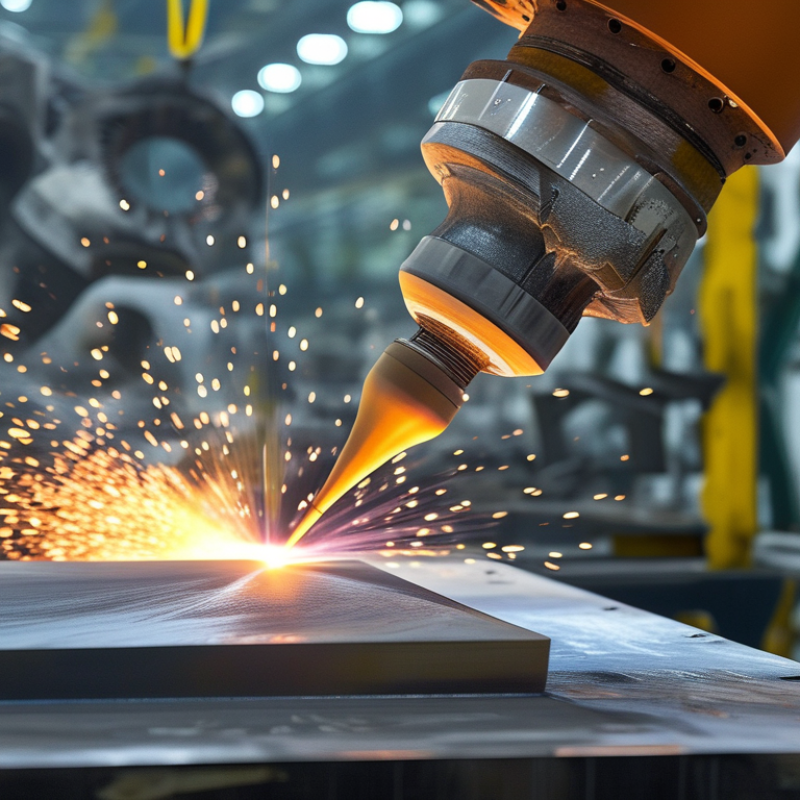
In today's manufacturing landscape, plasma spray powder offers distinct advantages. Its versatility makes it suitable for various industrial applications. One significant benefit is its ability to create durable coatings. These coatings resist wear, corrosion, and heat. This longevity is essential for components subjected to harsh environments.
Another key feature is the customization potential. Manufacturers can tweak formulations to suit specific needs. This customization allows for enhanced performance in unique applications. The ability to tailor a product can lead to innovation and efficiency in production processes.
Tips: When exploring plasma spray powder options, consider factors like material compatibility and environmental impact. Test different formulations on a small scale before full implementation. This step can help identify the most effective solutions.
Furthermore, the application method can influence the coating quality. Not every process yields the same results. Taking the time to analyze different techniques may reveal critical insights. Each manufacturing scenario is unique; experimentation may lead to improved outcomes.
Key Characteristics of Plasma Spray Powders for Manufacturing
Plasma spray powders play a critical role in modern manufacturing. Their unique characteristics make them suitable for a wide range of applications. One of the most significant advantages is their ability to provide excellent wear resistance. Reports indicate that parts coated with plasma spray can last up to five times longer than those made through conventional methods.
The particle size and distribution of plasma spray powders directly affect performance. Typically, powders range from 5 to 50 micrometers. This size allows for optimal melting and adherence during the spraying process. Moreover, the powders can be tailored to specific applications, enhancing their functionality. For example, coatings that offer thermal stability can withstand extreme temperatures, vital for sectors like aerospace.
Tip: When selecting plasma spray powders, consider the material compatibility with your application. A mismatch can lead to poor coating performance.
Additionally, plasma spray powders exhibit outstanding adhesion properties. They bond well with various substrates, ensuring durability. Industry studies reveal that coatings can achieve bonding strengths of over 40 MPa. This is essential for parts that undergo heavy stress in demanding environments.
Tip: Always evaluate the environmental conditions your coatings will face. Variations in temperature or exposure to chemicals can influence the choice of powder.
Understanding the characteristics of plasma spray powders is crucial for effective manufacturing. These details can guide you toward more reliable and efficient production processes.
Benefits of Plasma Spray Powders in Manufacturing
Comparative Analysis: Plasma Spray Powder vs. Traditional Coatings
Plasma spray powder offers significant advantages over traditional coatings,
particularly in durability and performance.
This advanced technology creates coatings that can withstand extreme temperatures and corrosion.
Unlike traditional coatings, which may wear off or degrade over time, plasma-sprayed coatings
maintain their integrity longer. This is crucial for components used in demanding environments.
Another key difference lies in the application process.
Plasma spraying allows for precise control over the coating thickness and uniformity.
Traditional coatings might suffer from inconsistencies, leading to potential vulnerabilities.
While traditional methods rely on painting or dipping, plasma spraying can achieve a better bond with substrates.
This enhances the overall longevity of parts.
However, not every application suits plasma spray powder. Some projects may require more
straightforward or cost-effective solutions. In these cases, traditional coatings might be adequate.
Evaluating the specific needs of each project is essential.
Understanding the benefits and
limitations of both options can lead
to better decision-making. This reflection ensures that the right choice aligns with
performance and
budget requirements.
Applications of Plasma Spray Powder in Various Industries
Applications of Plasma Spray Powder in Various Industries
Plasma spray powders are increasingly vital in several industries. In aerospace, they create durable coatings that withstand extreme conditions. Data from industry reports reveal that the aerospace coating market is projected to grow by 8.5% annually until 2025. This growth indicates a strong demand for advanced materials.
The automotive industry also benefits significantly from plasma spray powder. It enhances engine components by increasing wear resistance. A report by an automotive research firm shows that wear-resistant materials could reduce maintenance costs by up to 20%. This is crucial, as automotive manufacturers prioritize cost-effectiveness and longevity.
Medical applications are noteworthy. Plasma spray is utilized for orthopedic implants, promoting better osseointegration. According to scientific studies, up to 90% of patients with plasma-coated implants show improved healing. Such statistics reflect the importance of advanced materials in enhancing patient outcomes. Yet, challenges remain in maintaining consistent quality across different batches.
Technical Considerations When Choosing Plasma Spray Powder
When selecting plasma spray powder, several technical considerations come into play. The particle size distribution is crucial. It affects deposition efficiency and coating density. Typically, a finer particle size leads to better coating adhesion. However, too fine a powder may require adjustments in spray parameters.
Another important factor is the chemical composition of the powder. Different applications may demand specific material properties. Some industries require high heat resistance, while others need corrosion resistance. Understanding the requirements of the final product guides the material choice effectively.
Lastly, evaluate the powder's flowability. Poor flow can lead to inconsistent application and defects. Proper testing can reveal how smoothly the powder flows. This aspect is often overlooked but is vital for achieving high-quality coatings. Striking a balance among these factors is essential, as neglecting any can lead to subpar results.