Why Choose Stainless Powder for Your Manufacturing Needs?
Stainless Powder has gained significant traction in the manufacturing industry. Its unique properties make it an excellent choice for various applications. According to recent reports, the global stainless steel powder market is projected to reach $450 million by 2027, growing at a CAGR of 7.5%. This growth reflects the increasing demand for advanced materials in sectors such as automotive and aerospace.
Stainless Powder offers excellent corrosion resistance and high strength, crucial attributes for demanding environments. Industries are shifting toward this material due to its ability to lower production costs while enhancing product performance. A study by the International Powder Metallurgy Association highlights that components made from stainless powder exhibit superior durability compared to traditional materials.
Adopting Stainless Powder, however, is not without challenges. Manufacturers must address issues related to powder handling and sintering methods. This aspect invites reflection on optimal practices to mitigate potential inefficiencies. The benefits are substantial, but careful implementation is essential for maximizing gains.

Advantages of Using Stainless Powder in Manufacturing Processes
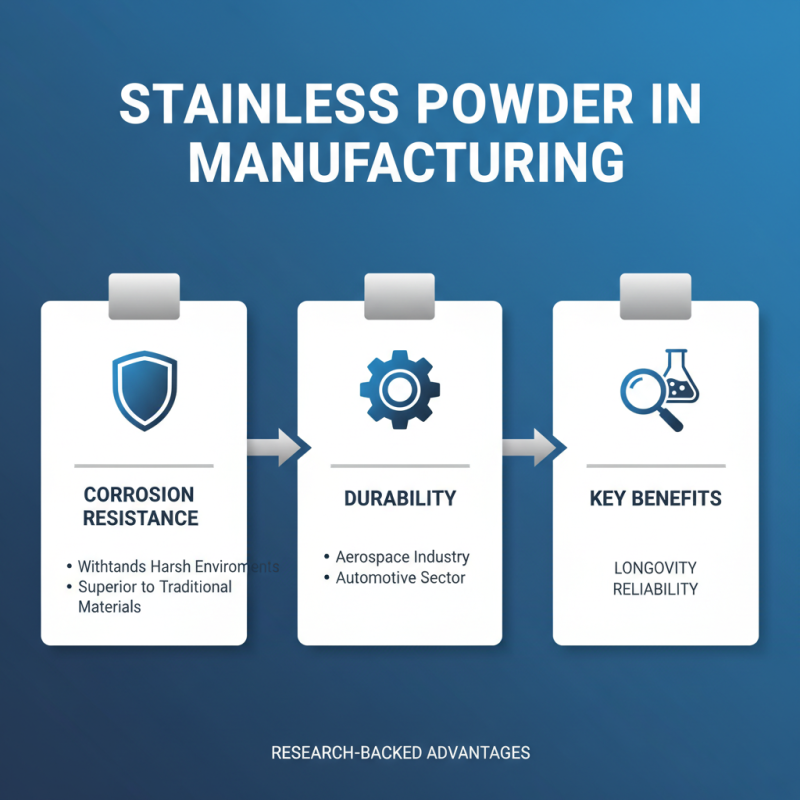
Stainless powder offers unique benefits in manufacturing. Its corrosion resistance is one of the most notable advantages. Research indicates that components made from stainless powder can withstand harsh environments better than traditional materials. This property is critical in industries such as aerospace and automotive, where durability is paramount.
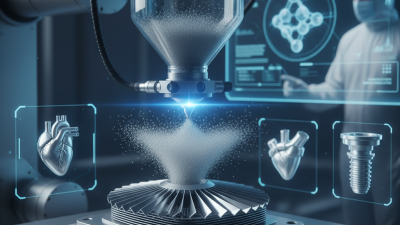
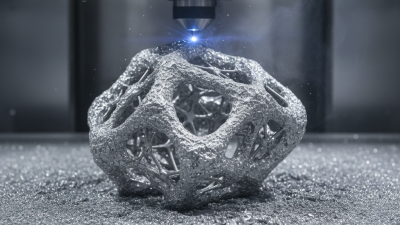
Additionally, stainless powder supports advanced manufacturing techniques like 3D printing. A study by the Metal Powder Industries Federation revealed a growing trend in additive manufacturing, predicting a market increase of 23% annually until 2026. This shift allows for more intricate designs while minimizing waste. However, challenges exist in powder handling and processing consistency, which need addressing for optimal results.
The use of stainless powder also reduces weight in manufactured products. According to the National Institute of Standards and Technology, lighter components can lead to improved fuel efficiency in transportation sectors. However, achieving the desired mechanical properties requires careful selection of powder composition and processing parameters. Manufacturers must stay informed about these variables to maximize performance.
Key Properties of Stainless Powder That Enhance Product Quality
Stainless powder stands out for its unique properties that significantly enhance product quality in manufacturing. One critical characteristic is corrosion resistance. According to a study by the International Stainless Steel Forum, stainless steel offers five to ten times better corrosion resistance compared to carbon steel. This attribute ensures durable products, especially in industries like aerospace and medical devices, where failure can lead to severe consequences.
Another vital property is its ability to be sintered. Sintering transforms fine stainless powder into solid forms. The process allows manufacturers to create complex shapes with high precision. Research published in the Journal of Materials Science indicates that parts produced via stainless powder sintering have up to 98% density. This density enhances mechanical properties, leading to stronger end products.
However, the use of stainless powder is not without challenges. The production of stainless powder can be costly. The equipment required for atomization and processing demands significant investment. While the quality potential is high, manufacturers must assess if the initial costs align with their production goals. Understanding these factors is essential for making informed decisions in manufacturing.
Applications of Stainless Powder Across Various Industries
Stainless powder is increasingly popular in various industries due to its unique properties. In the automotive sector, it provides excellent corrosion resistance, ensuring vehicle longevity. According to a recent report by the International Powder Metallurgy Association, the automotive market represents over 40% of the global stainless steel powder consumption. This highlights the importance of stainless powder in manufacturing high-performance components.
In the aerospace industry, stainless powders are used to produce lightweight yet strong parts. For example, components made from stainless powder can withstand extreme temperatures and pressures, making them vital for aircraft safety. A study by the Boeing Company indicates that using stainless steel powder in 3D printing can reduce waste by nearly 50%. Such efficiency is crucial in a sector where precision and reliability are paramount.
**Tip:** When considering stainless powder for your projects, evaluate the specific requirements of your application. Choose powders that match the mechanical properties you need.
In the medical field, stainless powders play a key role in producing surgical instruments. Their biocompatibility ensures the safety of medical devices. According to a report from Smith & Nephew, 30% of surgical tools are now made using powder metallurgy techniques. While the advantages are clear, it's essential to remain cautious about powder quality to avoid potential hazards during production.
**Tip:** Always source stainless powders from reputable suppliers to ensure high-quality results.
Why Choose Stainless Powder for Your Manufacturing Needs?
| Industry |
Application |
Benefits of Stainless Powder |
Challenges |
| Aerospace |
Lightweight structural components |
High strength-to-weight ratio, corrosion resistance |
High manufacturing costs |
| Medical |
Surgical instruments and implants |
Biocompatibility, ease of sterilization |
Tight tolerances needed for precision |
| Automotive |
Engine components and exhaust systems |
Durability, corrosion resistance |
Weight limitations on certain parts |
| Construction |
Reinforced structural parts |
Longevity, aesthetic appeal |
Cost of stainless materials |
| Electronics |
Electrical connectors and casings |
Conductivity, resistance to oxidation |
Thermal management concerns |
Comparative Analysis: Stainless Powder vs. Other Materials
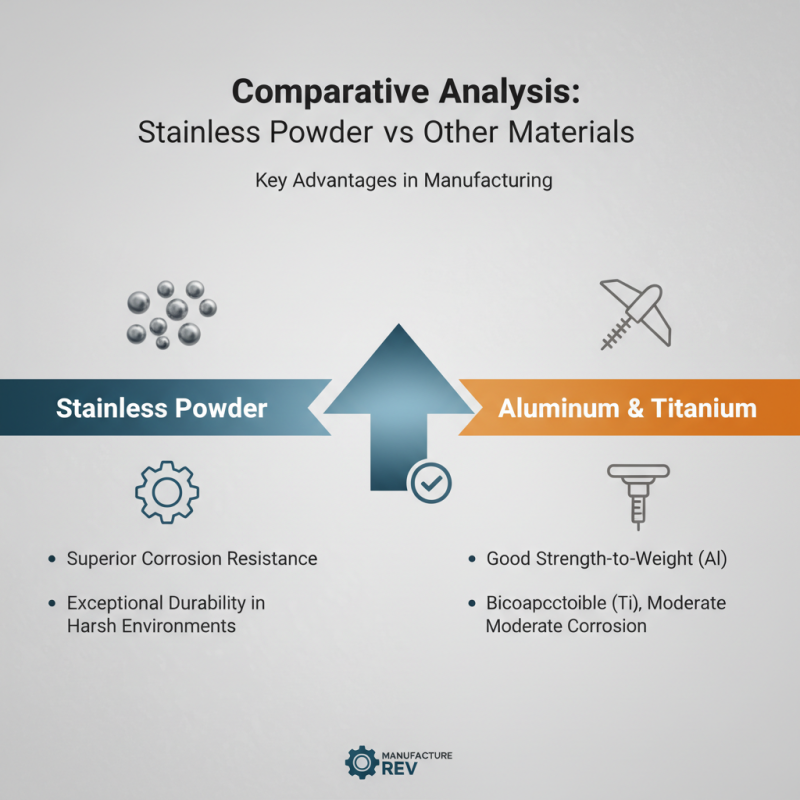
Stainless powder is becoming increasingly popular in various manufacturing applications. Its properties set it apart from other materials like aluminum or titanium. Stainless powders provide excellent corrosion resistance and durability. They withstand harsh environments better than many alternatives.
For projects requiring precision, stainless powder performs exceptionally well. It maintains tight tolerances, making it ideal for intricate components. Unlike some metals, it does not warp easily. This quality is crucial in industries such as aerospace and medical devices, where reliability is non-negotiable.
**Tips:** Consider the specific properties needed for your project. Think about how different materials react under stress. Stainless powder may be a better long-term investment compared to other materials. It offers not just strength, but also the potential for cost savings through longevity.
While stainless powder has advantages, it may not suit every situation. Its processing can require specialized techniques. If not managed well, waste can increase. Understanding the nuances is essential. Always evaluate your manufacturing goals before making a choice.
Sustainability and Environmental Impact of Stainless Powder Use
Sustainability is a crucial factor in manufacturing. The use of stainless powder significantly reduces the environmental footprint of production processes. According to a study by the International Stainless Steel Forum, recycling stainless steel saves around 70% energy compared to producing new steel from raw materials. This energy saving translates to a lower carbon footprint and reduced greenhouse gas emissions.
Moreover, stainless powder is often produced through processes that minimize waste. Research indicates that up to 90% of the material can be recycled. This not only cuts down on landfill contributions but also promotes a circular economy. The availability of post-consumer recycled stainless steel directly contributes to resource conservation. However, it is essential to address the challenges in recycling methods to ensure efficiency and effectiveness.
Stainless powder’s durability also plays a role in its sustainability credentials. It doesn't corrode easily, which extends its lifespan in various applications. But there are concerns about resource extraction, particularly in the mining of nickel and chromium. Responsible sourcing practices are necessary to address these issues. Manufacturers must continuously evaluate their processes to enhance sustainability.
Environmental Impact of Stainless Powder Use in Manufacturing