How to Choose the Right Metal Powder for Your Needs?
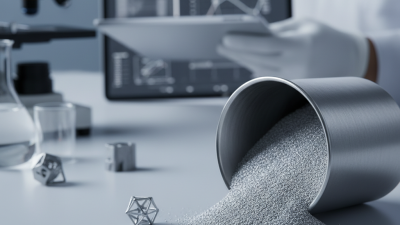
Choosing the right metal powder is crucial for various applications. The decision impacts performance, quality, and cost-effectiveness. Metal Powder Works offers insights into selecting the best options available. With numerous types of metal powders on the market, understanding their characteristics is essential.
Each metal powder has unique properties. For example, stainless steel powders resist corrosion but may not be as ductile. Copper powders, on the other hand, are highly conductive but can oxidize easily. It is vital to evaluate these properties based on your specific needs. Attention to detail can save costs and improve results.
However, navigating the choices can be overwhelming. There's a risk of selecting an unsuitable powder, leading to failures in production. This aspect requires careful consideration and sometimes expert advice. Understanding the nuances between different types can elevate your projects. Balancing functionality and cost is often challenging but essential for success in your endeavors.

Factors to Consider When Selecting Metal Powder for Additive Manufacturing
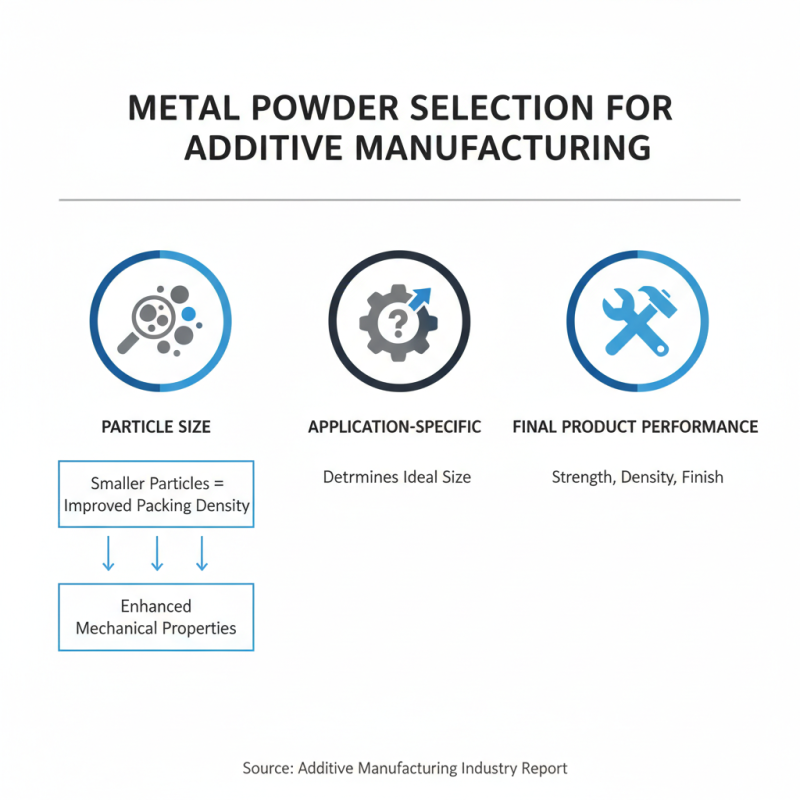
Selecting the right metal powder for additive manufacturing is crucial. Several key factors come into play. The particle size is one of the most significant. A report from the additive manufacturing industry indicates that smaller particles can improve the packing density. This influences the mechanical properties of the final product. The right size often depends on the specific application.
Another important factor is the chemical composition of the metal powder. Different applications demand different properties. For example, stainless steel offers corrosion resistance. However, it may not be suitable for high-temperature environments. Studies show that nearly 30% of failures in additive manufacturing are due to unsuitable material choices. Awareness of these pitfalls is essential.
The flowability of the metal powder affects the printing process as well. Poor flow can lead to inconsistent layers and defects. According to recent data, good flowability can enhance the overall efficiency of the additive manufacturing process by up to 20%. Experimentation may be necessary to find the optimal powder for your unique requirements.
Understanding the Different Types of Metal Powders and Their Properties
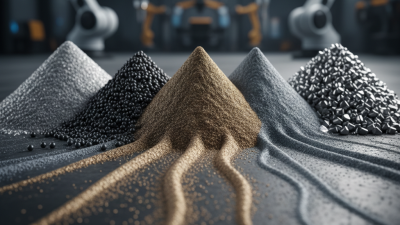
Choosing the right metal powder can significantly impact your project. Understanding the various types of metal powders and their unique properties is essential for success. Metal powders differ in composition, size, shape, and behavior when processed. For instance, stainless steel powders offer excellent corrosion resistance, while aluminum powders are lightweight yet strong. Each type serves specific applications and industries.
When selecting a powder, consider particle size. Finer powders tend to provide better surface finishing and packing density. However, they may be harder to handle. Coarser powders, on the other hand, can be easier to work with but may sacrifice some detail. It's crucial to assess the needs of your application before deciding.
Tips: Always test a small sample. This helps determine how the powder behaves in your processes. Keep in mind the storage conditions, as moisture can affect powder quality. Understanding how each powder interacts with different environments is vital. This can be a trial-and-error process, but it provides valuable insights for future projects. Remember, each metal powder has its advantages and shortcomings.
Evaluating Powder Characteristics: Particle Size, Morphology, and Distribution
When selecting metal powders, evaluating powder characteristics is key. Particle size plays a vital role in determining the flow and packing density of the powder. For instance, fine powders may flow poorly but offer high surface area for sintering applications. Larger particles, however, can enhance flowability but might result in a lower packing density. It's essential to weigh the benefits and drawbacks based on specific applications.
Morphology is another crucial factor. The shape of the particles influences how they interact during processing. Irregular shapes often lead to better packing, while spherical particles might improve flow. Analyzing the aspect ratio and surface roughness can reveal important insights into the powder's behavior. Understanding these properties is vital for achieving desired outcomes.
Lastly, distribution is something many overlook. A narrow particle size distribution can result in uniformity, which is often desirable in 3D printing. In contrast, a broader distribution can enhance stability in certain mixing processes. Challenging your assumptions about what works best can lead to unexpected insights. Reflecting on these characteristics ensures that selecting the right powder is more nuanced than it seems.
Applications of Metal Powders in Different Industries: A Comparative Study
Metal powders play a crucial role in various industries, from aerospace to automotive. Each application demands specific properties and compositions. In the aerospace sector, for instance, lightweight and high-strength materials are essential. Here, titanium and aluminum powders are often utilized. These materials enhance performance while reducing weight, which is critical for flight efficiency.
In contrast, the automotive industry prioritizes durability and cost-effectiveness. Here, iron and steel powders are widely used for parts manufacturing. They provide excellent mechanical properties and can be produced at a lower cost. However, the challenge lies in producing consistent quality, as variability can lead to significant performance issues.
The medical field uses metal powders differently. Biocompatible materials, like stainless steel and cobalt-chromium powders, are vital for implants. These materials ensure safety and longevity. Yet, there is ongoing research into improving their properties. Each industry has unique requirements, leading to a diverse landscape of metal powders. Understanding these differences can guide suitable choices.
How to Choose the Right Metal Powder for Your Needs? - Applications of Metal Powders in Different Industries: A Comparative Study
| Industry |
Metal Powder Type |
Applications |
Key Properties |
| Aerospace |
Titanium Powder |
Component manufacturing, light-weight structures |
High strength-to-weight ratio, corrosion resistant |
| Automotive |
Aluminum Powder |
Engine components, wheels |
Lightweight, good thermal conductivity |
| Medical |
Cobalt-Chromium Powder |
Dental implants, prosthetics |
Biocompatible, wear-resistant |
| Electronics |
Silver Powder |
Conductive inks, bonding applications |
Excellent conductivity, anti-corrosion |
| Construction |
Iron Powder |
Metal parts, structural elements |
High tensile strength, economical |