Unlocking the Future of Chrome Coating: The Role of Nickel Powder in Advanced Applications
The evolving landscape of advanced coating technologies is witnessing a transformative shift with the integration of Nickel Powder For Chrome in chrome coating applications. Recent industry reports indicate that the global market for chrome plating is projected to reach approximately $13 billion by 2026, driven by accelerated demand across automotive, electronics, and aerospace sectors. The utilization of nickel powder enhances the durability and corrosion resistance of chrome coatings, ultimately delivering superior performance and longevity. Research highlights that coatings reinforced with nickel powder not only provide aesthetic appeal but also improve wear resistance by up to 30%, making them ideal for high-stress environments. As manufacturers seek innovative solutions to meet stringent industry standards, the role of nickel powder becomes increasingly vital in unlocking future potentials in chrome coating technologies.
The Rise of Nickel Powder in Chrome Coating Technologies
The rise of nickel powder in chrome coating technologies marks a significant advancement in enhancing the performance of various applications. Nickel powder's unique properties make it an ideal candidate for chrome coating, offering superior corrosion resistance and wear characteristics. Recent trends indicate that in metal 3D printing, nickel-based alloys are among the top ten materials frequently utilized, showcasing their versatility and strength in demanding environments.
Electroplated hard chrome coatings have long been employed to extend the lifespan of mechanical components, but the integration of nickel powder into these coatings can elevate their durability. For instance, research highlights that co-electrodeposition techniques that incorporate nickel and diamond nanocomposites result in coatings that not only resist wear but also improve surface aesthetics, meeting the ever-increasing corrosion and appearance standards of the industry.
Tip: Consider incorporating nickel powder into your chrome coating processes to enhance performance metrics significantly. Additionally, keep an eye on advancements in cobalt-free technologies that support trivalent chromate applications in zinc plating, as these may offer environmentally friendly alternatives without compromising quality.

Key Benefits of Incorporating Nickel Powder in Coating Solutions
Incorporating nickel powder into chrome coating solutions has become a pivotal advancement in various industrial applications. According to a recent report by MarketsandMarkets, the global nickel powder market is expected to reach USD 2.3 billion by 2025, growing at a CAGR of 5.9%. This growth is largely attributed to the increasing demand for high-performance coatings, particularly in the aerospace and automotive industries, where enhanced corrosion resistance and wear properties are critical.
One of the key benefits of using nickel powder is its ability to improve the mechanical properties of the coatings. Nickel atoms not only enhance the hardness but also contribute to the ductility of the coatings, leading to improved durability in harsh environments. For instance, coatings with nickel powder exhibit a lower coefficient of friction and greater resistance to wear, which can extend the lifespan of components significantly. Research from the Journal of Materials Science reveals that the incorporation of nickel powder can increase the hardness of chrome coatings by up to 20%, offering considerable advantages for manufacturers looking to improve product lifespan and reliability.
Furthermore, nickel powder allows for better adhesion properties when applied to various substrates. According to a study published by the Surface Coatings International, coatings that include nickel powder demonstrate increased bonding strength, which can lead to reduced delamination and improved overall performance. With the push toward more sustainable manufacturing practices, the recyclability of nickel powder also positions it as an environmentally friendly option, making it a preferred choice among industry players seeking to innovate their coating solutions.
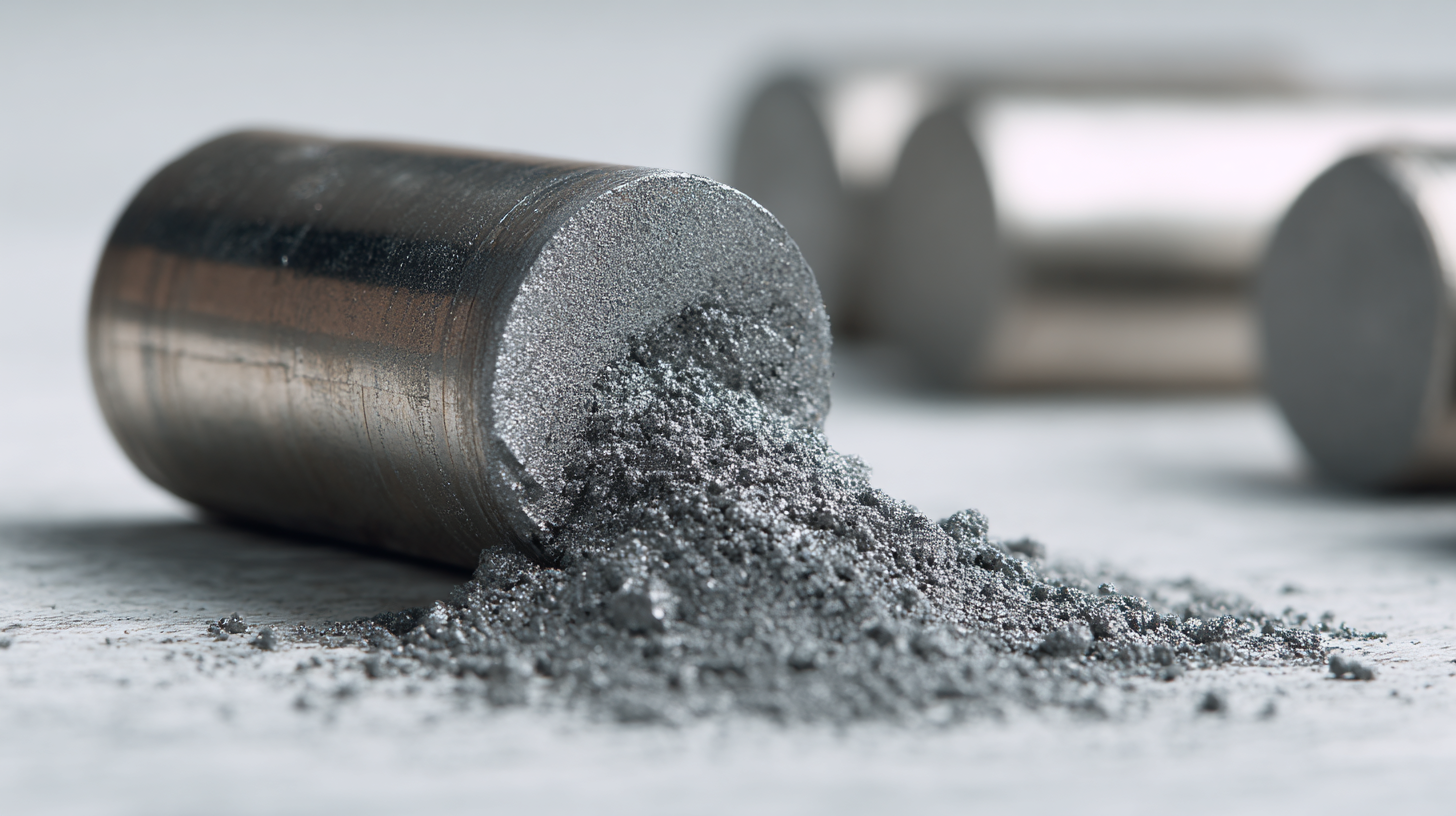
Innovative Applications of Chrome Coating with Nickel Powder
Innovative applications of chrome coating with nickel powder are paving the way for advanced solutions in various industries. The integration of nickel powder in chrome coatings enhances not only the aesthetic appeal but also the durability and corrosion resistance of treated surfaces. The 3D printing metals market, which includes nickel among other materials, is seeing significant growth, driven by increasing demands for custom components and precision manufacturing. According to recent forecasts, the 3D printing metals market is poised to expand as advanced applications for metals like nickel gain traction, reflecting a broader trend towards the use of innovative surface coatings.
As the metal finishing chemicals market is projected to grow from approximately $13.21 billion in 2025 to around $18.46 billion by 2035, with a compound annual growth rate of 3.4%, the adoption of chrome coatings, especially those enhanced with nickel powder, is expected to play a critical role. This growth emphasizes the industry's shift towards more efficient and sustainable finishing processes. Additionally, regulatory changes, such as those proposed by environmental agencies to transition from hexavalent to trivalent chromium, highlight the ongoing evolution in surface coating technologies, positioning nickel-infused chrome coatings as a viable alternative for new applications.
Innovative Applications of Chrome Coating with Nickel Powder
This chart illustrates the percentage distribution of applications for chrome coating enhanced with nickel powder across various industries.
Challenges and Solutions in Using Nickel Powder for Coatings
The use of nickel powder in chrome coating applications presents unique challenges that require innovative solutions. One primary issue is the tendency of nickel powder to agglomerate, which can lead to uneven coating thickness and compromised performance. To address this, meticulous control over the powder particle size and distribution is essential. Employing advanced milling techniques and additives can help enhance powder flowability and reduce clumping, resulting in a smoother application process and more uniform coatings.
Tips: When working with nickel powder, always consider the environmental conditions such as humidity and temperature, which can significantly affect powder behavior. Additionally, pre-screening and drying the nickel powder can further mitigate the risk of agglomeration.
Another challenge lies in the compatibility of nickel coatings with various substrates. Different materials may react differently to nickel, leading to adhesion issues or reduced durability. A thorough understanding of the substrate and the application environment is crucial. Implementing surface treatments or primers can help improve the adhesion between the nickel coating and the substrate, thereby enhancing longevity and performance.
Tips: Before applying nickel coatings, always conduct a compatibility test with the substrate material. This proactive measure can prevent costly failures and ensure a successful coating process.
Future Trends in Nickel Powder Integration for Advanced Coatings
The integration of nickel powder into advanced chrome coating applications is set to revolutionize surface treatment technologies. As industries seek enhanced durability and corrosion resistance, nickel powder emerges as a critical component in the formulation of these coatings. Its unique properties not only improve the mechanical strength of the coatings but also facilitate better adhesion and uniformity, making it ideal for high-performance environments.
Future trends indicate a growing focus on the sustainable sourcing and processing of nickel powder. With an increasing emphasis on environmental stewardship, manufacturers are looking into innovative extraction and recycling methods to minimize the ecological footprint associated with nickel mining. Coupled with advancements in nanotechnology, the application of nano-sized nickel powder could lead to coatings that are lighter yet stronger, offering unprecedented performance in sectors such as aerospace, automotive, and electronics. As research continues to unlock the potential of nickel powder, its role in the evolution of chrome coatings will likely expand, paving the way for smarter, more resilient products.
Unlocking the Future of Chrome Coating: The Role of Nickel Powder in Advanced Applications
| Application Area |
Nickel Powder Type |
Coating Thickness (μm) |
Adhesion Strength (MPa) |
Corrosion Resistance (hrs) |
| Aerospace |
Ultrafine Nickel Powder |
30 |
45 |
600 |
| Automotive |
Nano Nickel Powder |
25 |
50 |
520 |
| Electronics |
Micron Nickel Powder |
20 |
60 |
480 |
| Medical Devices |
Spherical Nickel Powder |
15 |
40 |
550 |