Top 5 Innovative Techniques in Powder Manufacturing for Superior Quality
In recent years, the field of Powder Manufacturing has seen significant advancements, driven by the demand for superior quality and performance in various applications. According to a report by MK Analytics, the global powder manufacturing market is projected to reach USD 55 billion by 2025, growing at a CAGR of approximately 6.2%. This growth is propelled by the continuous innovations in production techniques that enhance the material properties and consistency of powder products across industries such as pharmaceuticals, aerospace, and advanced materials.
As manufacturers strive to meet the increasing standards set by industries, the adoption of innovative techniques is becoming essential. These techniques not only improve the physical characteristics of powders but also contribute to cost efficiency and sustainability in manufacturing processes. For instance, methods such as gas atomization and innovative milling technologies are gaining traction, facilitating better particle size distribution and morphology, which are critical for end-use applications.
This article explores the top five innovative techniques in Powder Manufacturing that are revolutionizing the industry, focusing on their contributions to achieving superior quality and meeting evolving market demands. By understanding these advancements, manufacturers can better position themselves to leverage opportunities and overcome challenges in the dynamic landscape of powder technologies.
Emerging Powder Manufacturing Technologies for Enhanced Material Performance
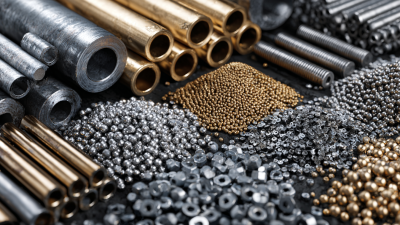
The demand for specialized metal powders in additive manufacturing is rapidly growing, driven by the need for enhanced material performance across various industries. Recent technological advancements have paved the way for innovative techniques in powder manufacturing, focusing on producing high-quality materials that meet the rigorous demands of applications such as aerospace, automotive, and energy sectors. As companies seek to optimize their designs, the ability to create tailored metal powders with specific properties becomes a key competitive advantage.
Tips: One effective approach for companies venturing into metal powder manufacturing is to invest in R&D to explore new powder compositions and production methods. Collaborating with universities or research institutions can lead to breakthroughs in powder properties and functionalities, essential for advanced manufacturing. Additionally, staying updated with market trends and consumer needs will guide companies in developing innovative products that cater to emerging applications.

The market for metal powders is projected to exceed USD 14.9 billion by 2034, underscoring the significant growth potential in this sector. As industries demand materials that not only perform better but are also cost-effective, innovations like cobalt-free low-nickel hydrogen storage powders can provide sustainable alternatives without compromising performance. Embracing these emerging technologies ensures that manufacturers remain at the forefront of the industry, positioning themselves strategically for future opportunities.
Advancements in Powder Homogenization Techniques for Consistent Quality
Recent advancements in powder homogenization techniques have significantly improved the consistency and quality of powder products across various industries. One of the most notable innovations is the implementation of advanced blending technologies that utilize high-shear mixers. These mixers generate intense mechanical forces that promote the uniform distribution of particles, ensuring a homogenous blend that enhances the final product's performance. This method not only reduces processing time but also minimizes the risk of segregation, leading to more reliable quality control.
Another promising approach involves the use of fluidized bed technology, which can optimize the drying and coating processes. By suspending powder particles in a controlled airflow, fluidized beds enable uniform heat and mass transfer, resulting in consistent moisture content and particle characteristics. This technique is particularly beneficial in industries such as pharmaceuticals and food production, where precise quality is paramount. Furthermore, the integration of real-time monitoring systems allows for continuous adjustments during production, ensuring that any deviations from quality specifications are promptly addressed, thereby enhancing overall product reliability.
Innovative Powder Sintering Methods for Optimal Properties
In the realm of powder manufacturing, innovative sintering methods play a pivotal role in achieving optimal material properties. These advanced techniques, such as spark plasma sintering and microwave sintering, allow for greater control over the microstructure of the powder, ensuring improved density and mechanical characteristics. Spark plasma sintering, for instance, utilizes pulsed electrical currents to enhance thermal processes, enabling rapid densification while preserving the material's integrity. Similarly, microwave sintering provides uniform heating, reducing thermal gradients and leading to better crystallinity in the final product.
Tips for optimizing powder sintering include carefully selecting sintering temperatures and times, as these parameters significantly impact the final product's mechanical properties. It is crucial to perform preliminary tests to determine the ideal conditions for specific powder compositions. Additionally, experimenting with different atmospheres during sintering—such as vacuum or inert environments—can further refine the microstructure and improve overall quality.
Another innovative approach involves the use of additive manufacturing techniques alongside traditional sintering methods. Integrating these technologies not only allows for complex geometries but also enables the production of functionally graded materials. By leveraging advancements like these, manufacturers can enhance the performance and application range of sintered metallic and ceramic powders, driving the industry towards superior quality outcomes.
Top 5 Innovative Techniques in Powder Manufacturing for Superior Quality
This chart illustrates the effectiveness of five innovative powder sintering methods in enhancing the properties of manufactured powders. Each technique is evaluated based on its impact on properties such as density, ductility, and thermal conductivity.
Revolutionary Techniques in Powder Coating for Enhanced Durability
The field of powder coating has witnessed remarkable advancements in recent years, with innovative techniques emerging to enhance the durability and overall performance of coated products. One breakthrough method is the use of advanced polymer formulations that allow for superior adhesion and resistance to environmental factors. By creating a more robust bond between the powder and the substrate, these formulations help to prevent chipping, cracking, and peeling, ensuring that the finished product maintains its aesthetic appeal and functionality over time.
Another revolutionary technique in powder coating involves the incorporation of nanotechnology. By integrating nanoscale additives, manufacturers can significantly improve the mechanical properties of powder coatings. These enhancements lead to increased hardness, improved scratch resistance, and better thermal stability. Furthermore, the application of nanostructured coatings fosters self-cleaning properties, reducing maintenance efforts and prolonging the life span of the coated items. As these innovative methods continue to evolve, they pave the way for more resilient and high-performance powder coatings in various industries.
Top 5 Innovative Techniques in Powder Manufacturing for Superior Quality
| Technique |
Description |
Advantages |
Application |
| Electrostatic Spray Coating |
Utilizes charged powder particles that adhere to surfaces. |
Enhanced coverage and reduced waste. |
Automotive, furniture, and outdoor equipment. |
| Fluidized Bed Coating |
Suspends parts in a bed of fluidized powder for uniform coating. |
Excellent film build; suited for complex shapes. |
Small components, fasteners, and fittings. |
| Nano-particle Coating |
Incorporates nano-technology for superior strength. |
Improved wear resistance and corrosion protection. |
Aerospace and high-performance automotive parts. |
| Hybrid Coating Systems |
Combines different coating methods for enhanced properties. |
Versatile applications and improved durability. |
Industrial machinery and heavy-duty equipment. |
| Thermal Spray Coating |
Applies molten material through a spraying process. |
High thickness and excellent coating adhesion. |
Oil and gas, power generation industries. |
Sustainability in Powder Manufacturing: Eco-Friendly Innovations and Practices
Sustainability has become a pivotal concern in the powder manufacturing industry, driving the adoption of eco-friendly innovations and practices. One significant technique is the use of
renewable resources for raw materials. By sourcing ingredients from sustainable origins, manufacturers can significantly reduce their carbon footprint while promoting a
circular economy. For instance, incorporating biopolymers derived from plant materials not only enhances sustainability but also can improve product performance.

Another notable practice is the implementation of energy-efficient processes in powder production. Advanced technologies, such as low-energy drying methods and
heat recovery systems, minimize energy consumption throughout the manufacturing process. These techniques not only lower operational costs but also contribute to a
reduction in greenhouse gas emissions. Additionally, manufacturers are increasingly employing water-efficient systems to mitigate waste and ensure that water usage is carefully managed, further enhancing their commitment to environmental stewardship. The integration of these eco-friendly innovations reflects the industry's response to ecological challenges, positioning powder manufacturing as a leader in sustainable practices.