How to Optimize Laser Powder Bed Fusion Process for Quality?
The Laser Powder Bed Fusion Process has revolutionized additive manufacturing, allowing for complex geometries and optimized material usage. Dr. Emily Chen, an industry expert in additive manufacturing, states, "Understanding and optimizing the Laser Powder Bed Fusion Process is essential to achieve high-quality parts." This assertion emphasizes the need for continuous improvement in this crucial technology.
Quality in the Laser Powder Bed Fusion Process depends on various parameters, including powder characteristics, layer thickness, and laser power. Experts have observed that even minor adjustments can lead to significant improvements. High resolution and layer uniformity are benchmarks of success in this field. However, inconsistencies still arise, and professionals are often left questioning the sources of these defects.
The quest for optimal processing parameters is ongoing. Operating conditions can vary dramatically, leading to unpredictable results. While advancements have been made, challenges remain. As the industry evolves, fostering collaboration between researchers and manufacturers is vital. Together, they can push the boundaries of the Laser Powder Bed Fusion Process. This partnership will drive innovation and ultimately enhance the quality of final products.
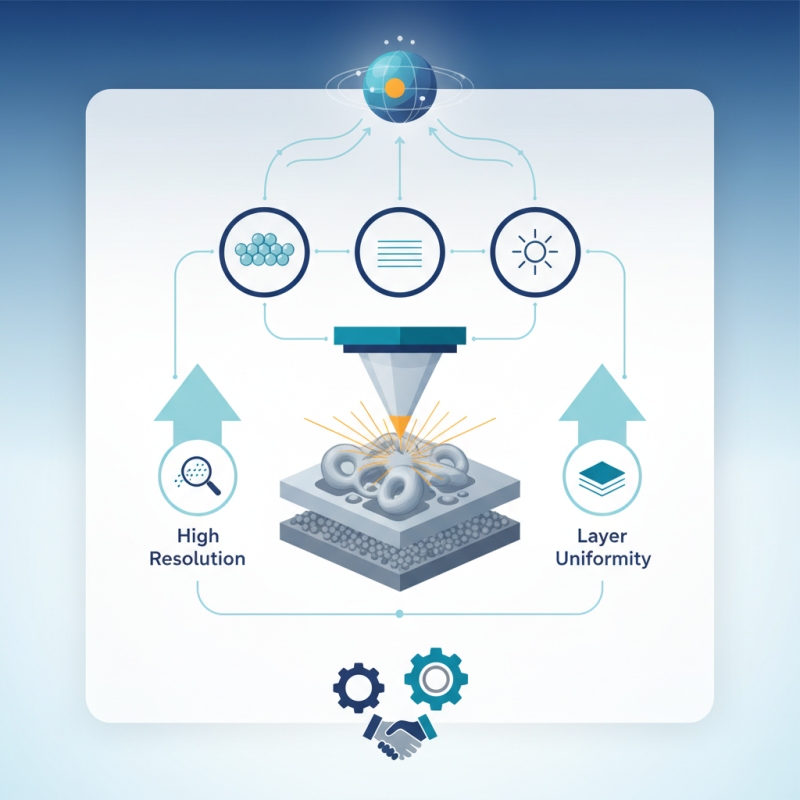
Understanding the Laser Powder Bed Fusion Process Basics
Laser Powder Bed Fusion (LPBF)
is a crucial additive manufacturing technique. It involves melting metal powders layer by layer with a focused laser. This method offers high precision and complexity in part designs. According to the ASTM International, LPBF can achieve a layer thickness of just 20 to 100 micrometers.
While LPBF provides exciting opportunities, challenges remain. Thermal gradients during the process can induce residual stresses. A study from the National Institute of Standards and Technology (NIST) noted that these stresses can lead to warping or cracking. Understanding these factors is essential for optimizing the LPBF process for quality.
Controlling powder quality is fundamental. Poor powder characteristics can affect flowability and compaction. Research shows that particle size distribution and morphology play significant roles. If the powder is not ideal, the entire print can suffer. Therefore, robust quality control measures and regular equipment maintenance are necessary for consistent outcomes.
Factors Influencing Quality in Laser Powder Bed Fusion
In laser powder bed fusion (LPBF), several factors influence the final quality of the parts produced. The layer thickness plays a vital role. Thinner layers often produce higher resolution but can slow down the build process. The balance between speed and quality needs careful consideration.
Temperature fluctuations during the build can lead to warping or residual stresses. Consistent thermal conditions help maintain uniformity across the build. Monitoring the build surface's temperature can be invaluable.
**Tips:** Maintain a stable environment when working with LPBF. This will enhance the final product's quality. Pay attention to the powder characteristics. Use properly sized and uniform powders for better flow and packing density.
Another essential factor is the laser parameters. The laser power, scan speed, and hatch spacing must be optimized for each material. Small adjustments can lead to significant quality differences.
**Tips:** Experiment with various laser settings during the test build phase. This helps identify the ideal parameters without risking production parts. Be prepared for trial and error; not all adjustments yield improvements. Understanding the balance of these factors is key to achieving high-quality results in LPBF.
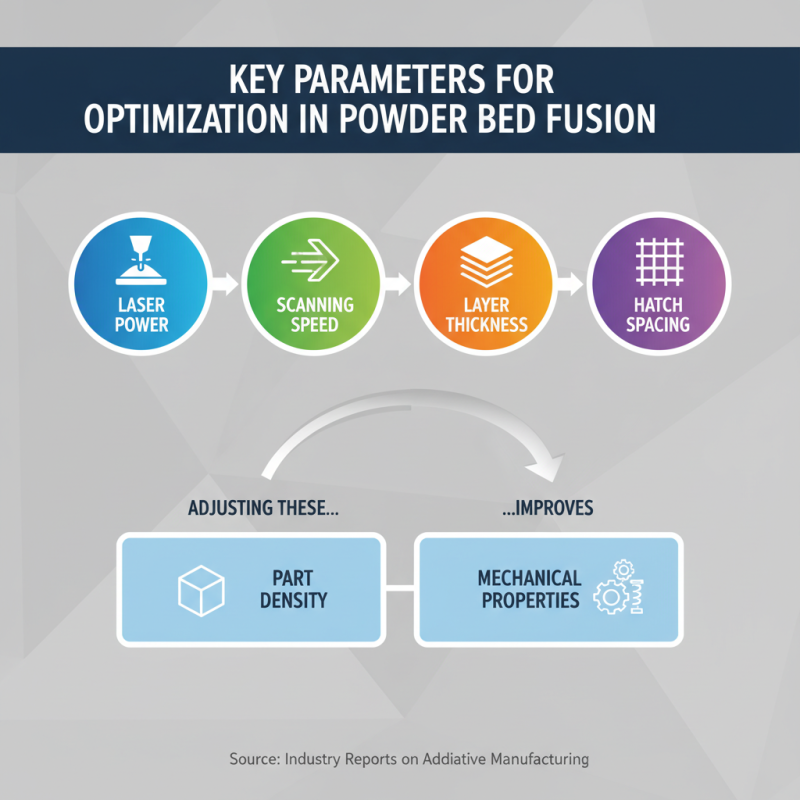
Key Parameters for Optimization in Powder Bed Fusion
The optimization of the Laser Powder Bed Fusion (LPBF) process is vital for achieving superior quality in additive manufacturing. Key parameters play an essential role in this optimization. Fundamental factors include laser power, scanning speed, layer thickness, and hatch spacing. According to industry reports, adjusting these parameters can significantly influence part density and mechanical properties.
Laser power and scanning speed must be carefully balanced. High power can improve melt pool characteristics but may lead to overheating. A study indicated a 20% increase in density with optimal laser settings. However, this increase can be countered by excessive speeds, which may create voids.
**Tip:** Regularly monitor the thermal profile during production. This practice helps prevent overheating while ensuring material quality.
Layer thickness also contributes to surface finish. Thicker layers can speed up production but might increase roughness. Maintaining a layer thickness of around 0.05 mm to 0.1 mm typically yields a smoother surface. Attention to hatch spacing is important too. Closer spacing can enhance density but requires more energy and time.
**Tip:** Conduct trials with different layer thicknesses to find the ideal balance for specific materials. This iterative process can highlight potential flaws in surface finish and mechanical integrity.
Techniques for Monitoring and Controlling Process Quality
In the realm of laser powder bed fusion, monitoring process quality is critical. Real-time data collection can enhance process repeatability. Techniques such as infrared thermography and high-speed imaging provide insights into temperature distribution and melt pool dynamics. Research indicates that discrepancies in temperature can lead to defects, underscoring the need for precise thermal management.
Control strategies are also essential in ensuring optimal build quality. Variations in layer thickness can impact mechanical properties. Implementing feedback loops allows for adjustments during the build process. A study found that 30% of parts suffered from inconsistent density due to insufficient control measures. This emphasizes the importance of robust process monitoring techniques to mitigate risks associated with build failures.
Using machine learning algorithms for predictive analytics can offer another layer of quality control. Accurate predictive models can alert operators to potential deviations before failures occur. However, reliance on such technology must be balanced with human oversight. Continuous training and validation of models are necessary to maintain their effectiveness. Neglecting these factors can lead to costly errors and diminished part quality.
Optimization of Laser Powder Bed Fusion Process for Quality
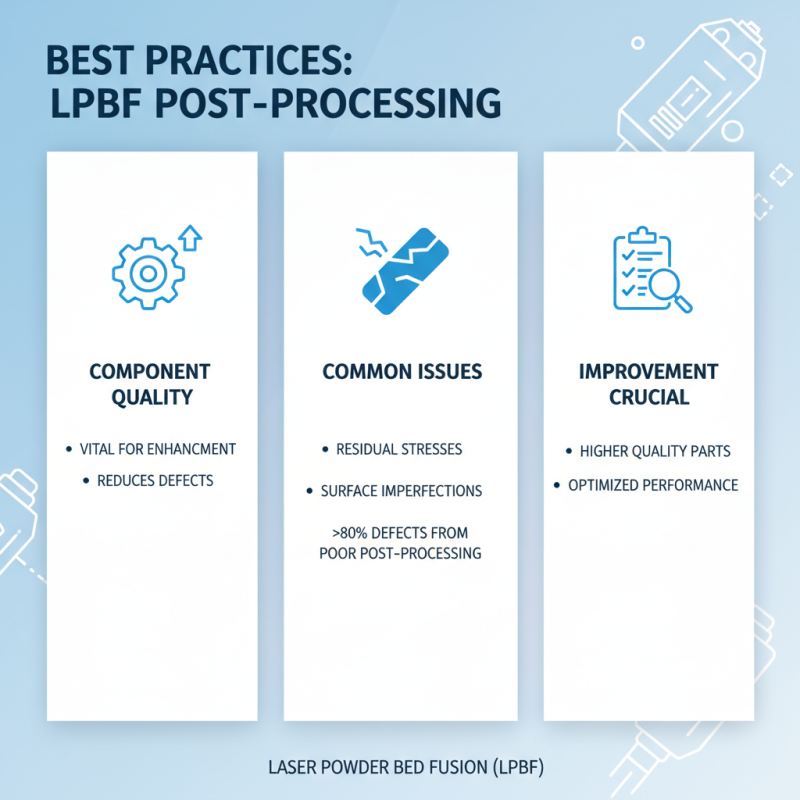
Best Practices for Post-Processing to Improve Component Quality
Post-processing is vital in enhancing the quality of components made through laser powder bed fusion (LPBF). This method often leaves residual stresses and surface imperfections. A study from the additive manufacturing sector shows that more than 80% of defects arise from inadequate post-processing techniques. Therefore, improving these practices is crucial for producing high-quality parts.
Heat treatment is a common post-processing strategy. It helps relieve residual stresses and improve mechanical properties. Research indicates that appropriate heat treatment can reduce internal stresses by up to 60%. However, not all components benefit equally. Some materials may become brittle if improperly treated, highlighting the importance of tailored approaches. Additionally, surface finishing techniques such as shot peening can enhance surface integrity. This method improves fatigue resistance and can be incredibly effective, yet it requires precise parameters to avoid overloading the part's surface.
Another area for consideration is the elimination of support structures. While necessary during the build process, they can introduce imperfections. Post-processing techniques like machining or grinding help, but these processes can also result in dimensional inaccuracies. An internal report from an industry expert suggested that up to 30% of parts may require rework due to dimensional deviations after post-processing. This calls for continuous innovation and refinement in both the printing and post-processing stages to achieve better consistency in component quality.