2026 Top Carbide Powder Types for Global Buyers
Choosing Carbide Powder is not simply a matter of comparing prices or selecting the finest grade. Global buyers must match composition, particle size, oxygen content, and consistency to the intended process. A powder suited to a cutting insert may not perform well in a wear-resistant component. Small differences matter.
Powder-metallurgy authority Randall M. German has written extensively about how powder characteristics influence processing and final part quality. A practical editorial paraphrase of that principle is: “Match the powder to the process and the finished part.” This is a paraphrase, not a verbatim quotation. It points buyers toward measurable specifications, supplier documentation, and representative test data—not broad claims alone.
This guide reviews major carbide powder types, including tungsten carbide, titanium carbide, chromium carbide, and tantalum carbide. It considers their typical properties, common industrial uses, and purchasing checks. For example, particle-size distribution can affect packing and sintering, while chemistry may influence hardness or oxidation resistance. Ask for current technical data and clarify test methods. Compare batches where consistency is essential. Real-world performance still depends on formulation, equipment, and operating conditions. A datasheet cannot tell the whole story. Buyers should treat grade names as starting points, not guarantees, and confirm suitability through qualified technical evaluation before placing large orders.
What Carbide Powders Are and How They Are Classified
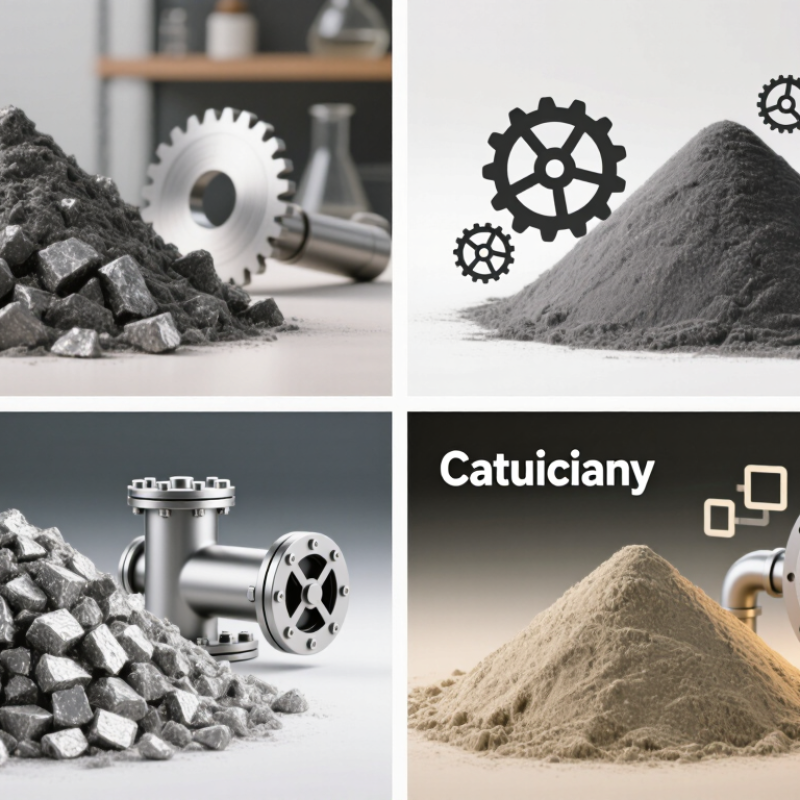
Carbide powders are fine particles made from carbon combined with a metal or metalloid. Common examples include tungsten carbide, silicon carbide, titanium carbide, and tantalum carbide. Their properties differ: tungsten carbide is valued for wear resistance, while silicon carbide handles high temperatures and abrasive conditions. The word “carbide” covers a broad family, not one standard material.
Classification often starts with chemical composition. Buyers may also sort powders by particle size, particle shape, purity, or manufacturing route. A fine, rounded powder can behave differently from a coarse, irregular batch, even when both share the same chemistry. The distinction matters. Particle-size figures should be checked alongside the measurement method, since test methods can report different distributions.
For procurement, review the grade specification and available test data rather than relying on a product category alone. Useful checks may include particle-size distribution, chemical composition, oxygen level, and free carbon. These details affect mixing, pressing, sintering, and final performance. Yet no single label tells the whole story. A powder that performs well in one process may need adjustment in another, so trial batches remain worthwhile. The classification is a starting point, not a guarantee.
Tungsten Carbide Powder: Grades, Properties, and Uses
Tungsten carbide powder is not a single, interchangeable material. Its grade depends on factors such as particle size, carbon balance, purity, and oxygen content. Fine and submicron powders can support dense structures with high hardness, while coarser powders may help improve toughness in selected applications. The right choice depends on the finished part, not just a specification sheet. Details matter.
After blending with a metallic binder and sintering, carbide grades are used in cutting tools, wear-resistant components, mining tools, and forming dies. Fine-grain materials can suit sharp cutting edges, where hardness and edge retention are important. Coarser structures may be considered for parts facing impact or abrasive wear. These are useful starting points, not guarantees: binder content, processing conditions, and final geometry also affect performance. A neat grade chart cannot predict every production result. I would verify powder certificates and run a small trial under real operating conditions.
Tips: Match particle size and carbon content to the intended process. Check lot consistency, and confirm handling and storage guidance with the supplier. Even a promising grade may need adjustment after testing.
Other Major Carbide Powders: Titanium, Tantalum, Niobium, and Chromium
2026 Top Carbide Powder Types for Global Buyers
Other Major Carbide Powders: Titanium, Tantalum, Niobium, and Chromium
Titanium carbide suits hard, wear-resistant components, including cutting-tool parts and protective coatings. Tantalum carbide retains strength at very high temperatures, making it useful in demanding refractory and alloy applications. Niobium carbide can help control grain growth in cemented carbides. Chromium carbide is often selected for coatings exposed to abrasion and elevated temperatures. The best choice depends on the operating environment, not just a powder’s headline hardness.
Supply deserves equal attention. The USGS Mineral Commodity Summaries 2025 estimates 2024 niobium mine output at about 99,000 metric tons, with roughly 92,000 from Brazil. This is mine output, not carbide-powder production, but it signals concentrated upstream supply. Buyers should compare purity, carbon balance, oxygen level, particle-size distribution, and batch consistency. Small differences matter. A powder that flows poorly can create uneven feeding and inconsistent parts. Still, powder selection is not always tidy; process conditions may outweigh a specification-sheet ranking.
Tips: Request a recent certificate of analysis and representative particle-size data. Check whether the test method matches your own quality-control process. For coating applications, confirm that the powder’s size and morphology suit the feed system.
How Carbide Powder Properties Shape Industrial Applications
Tungsten carbide powder is widely used in wear-resistant parts and cutting tools because it combines high hardness with useful toughness. In a workshop, that balance can help an edge withstand repeated contact with abrasive material. Silicon carbide suits abrasive products and high-temperature ceramic components, where thermal conductivity and oxidation resistance matter. Particle size changes the result. Fine powder may support a smoother sintered structure, but it can also agglomerate during handling.
Boron carbide offers very high hardness at relatively low density, making it relevant to abrasives and protective ceramics. Titanium carbide is valued in hard coatings and cermets, where heat resistance and wear performance are important. Hardness alone is not enough. Buyers should also examine particle-size distribution, purity, oxygen content, and powder morphology, since these affect pressing, sintering, and final consistency.
A specification sheet is a starting point, not proof of performance. Ask for test methods and representative batch data, then compare samples under the intended processing conditions. A powder that flows neatly from a container may still sinter unevenly. That detail is easy to miss. Application trials can reveal trade-offs that a single hardness value cannot capture, though test results may not transfer perfectly between production lines.
2026 Top Carbide Powder Types for Global Buyers
Typical compound density varies by composition, purity, and processing. The comparison highlights how carbide selection can align with application needs.
Application context: Tungsten carbide is widely used in cutting tools and wear parts; titanium carbide in cermets and wear-resistant coatings; tantalum carbide in high-temperature materials; silicon carbide in abrasives and ceramics; and boron carbide in abrasives and neutron-absorbing applications. Values shown are typical material densities in g/cm³, not powder bulk densities.