China’s metal additive manufacturing market includes suppliers with very different strengths. Some focus on compact systems for research and prototyping. Others build production machines with larger build volumes, automated powder handling, and process-monitoring tools. For buyers comparing Metal Powder Bed Fusion suppliers, a polished machine brochure is only a starting point.
Professor Milan Brandt, a widely published researcher in metal additive manufacturing, has emphasized the importance of understanding the process as well as the equipment. A concise paraphrase of that principle is: “A capable machine alone does not guarantee a qualified part.” This is a paraphrase, not a verified verbatim quotation. It points to a practical question: can the supplier help control powder quality, build consistency, post-processing, and inspection?
Look closely at the details. Ask for sample-part data, material options, layer-thickness ranges, service response times, and references from customers making similar components. A stainless-steel coupon on a sales desk tells you little about repeatability across a production run. Nor does a long feature list prove that the system fits your factory, team, or budget. There are gaps in public supplier data, too; comparisons are not always clean. This guide examines leading China-based suppliers, the capabilities they report, and the questions worth asking before shortlisting a system. A careful comparison takes time. It should.
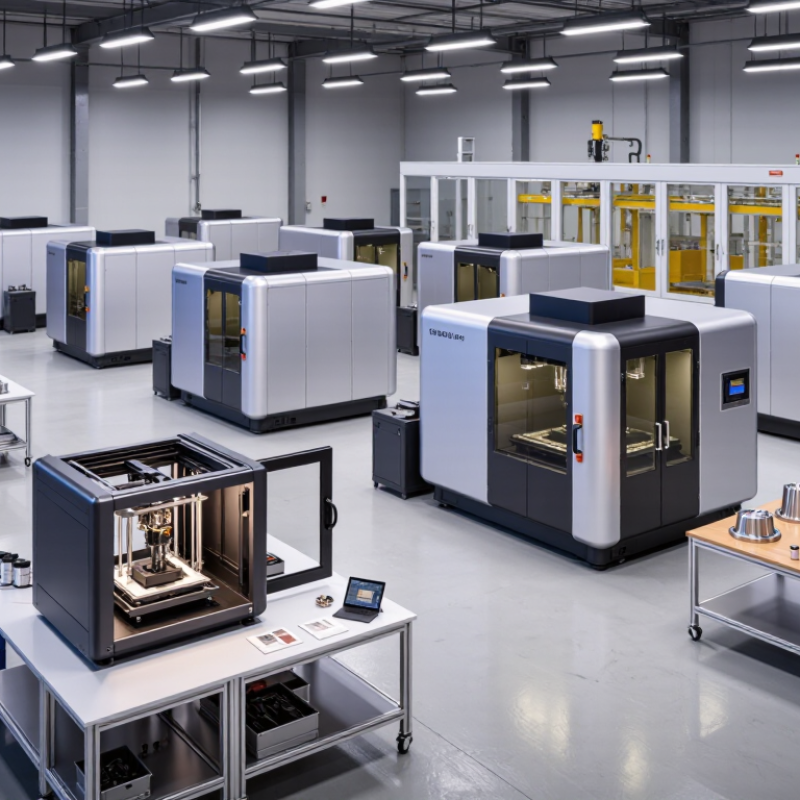
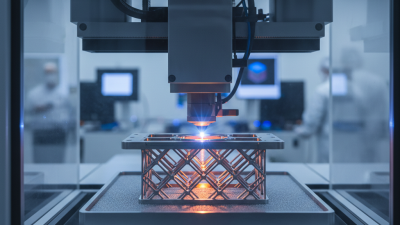
When comparing China’s metal powder bed fusion suppliers, begin with the process definition, not a machine label. ISO/ASTM 52900 uses powder bed fusion (PBF) for processes that selectively fuse regions of a powder bed with thermal energy. In metal production, common variants include laser beam PBF and electron beam PBF. The energy source matters.
The distinction affects part properties and production choices. Laser systems typically process powder in a controlled atmosphere, while electron beam systems operate under vacuum. These details can influence material options, surface finish, support design, and build planning. PBF does not guarantee a particular density or accuracy. Results depend on the machine, material, parameters, and post-processing. A supplier’s terminology may be correct, yet its practical capability still needs verification. That is easy to overlook.
Tips: Ask suppliers to identify the process using ISO/ASTM terminology, then request sample build records and inspection data. Compare like with like: alloy, part geometry, orientation, and finishing route. A glossy sample proves little by itself. I would also ask how process changes are documented; this step is sometimes less clear than expected.
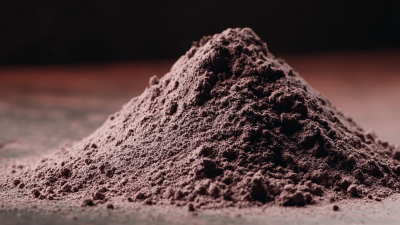
For buyers comparing metal powder bed fusion suppliers in China, layer thickness is a practical starting point. LPBF commonly uses layers around 20–60 μm, while some setups extend toward 100 μm. E-PBF often runs at roughly 50–100 μm, depending on the alloy, machine, and build strategy. These are typical ranges, not guarantees. Ask suppliers for parameter records from parts similar to yours.
A thinner LPBF layer can capture small channels and fine surface details, but it usually adds build time. You can see the difference on a thin-walled test piece: edges may look sharper, yet support removal and finishing still matter. E-PBF’s thicker layers can help build larger components efficiently, though surfaces may appear rougher. Not every part benefits from the finest setting. That sounds simple, but it is easy to overlook.
When reviewing a supplier, request a sample cross-section, dimensional data, and the stated layer thickness for the quoted material. Check whether the figure describes the actual production recipe or only the machine’s available range. Compare porosity, repeatability, and post-processing alongside speed. A specification sheet alone tells only part of the story.
China’s metal powder bed fusion suppliers are best assessed through evidence, not headline specifications. Compare build volume, laser configuration, recoater design, atmosphere control, and calibration records. Ask how the system handles a thin-wall test coupon and repeated builds. Specs are not proof. Request sample data, including dimensional variation and surface finish, under stated conditions.
Materials deserve equal scrutiny. Check powder chemistry, particle-size distribution, oxygen limits, and batch traceability. Ask how recycled powder is screened and when it is retired. A supplier may list several alloys, but that does not confirm reliable parameter sets for each one. Request material certificates and test results for the intended part geometry. Small differences matter.
Support can determine whether a capable machine stays productive. Evaluate installation, operator training, software updates, spare-part availability, and access to application engineers. Ask for realistic response times and a clear escalation path. If possible, visit a reference site and speak with operators, not only sales staff. Supplier comparisons are rarely perfectly like-for-like; test conditions and service coverage can differ. Record those gaps before making a decision.
Representative melting-temperature ranges for commonly used metal powder bed fusion alloys (°C)
These alloy reference ranges provide context for evaluating a supplier’s stated material portfolio; they are not supplier ratings. When comparing systems and support, verify material-specific process data, application references, and service coverage directly. Values are approximate and can vary with composition and reference source.
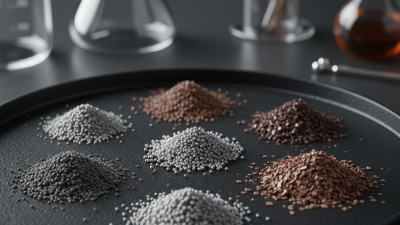
When comparing metal powder bed fusion suppliers in China, request powder test records before judging a quotation. ASTM F3049 provides guidance for characterizing metal powders used in additive manufacturing. It is not, by itself, a pass-or-fail certification. Ask which tests were performed, how samples were taken, and whether the reported results match the delivered lot.
Particle-size data deserves a close look. A report should identify the measurement method and show the distribution, including D10, D50, and D90 values. These figures describe different points in the powder population; one average cannot tell the whole story. Compare results against the supplier’s stated specification and your machine’s process requirements. A laser-diffraction result and a sieve result may not be directly interchangeable. Small detail. Big difference.
For a practical check, request a lot-specific certificate, the sampling date, and any documented handling or reuse history. Review morphology and flow-related measurements alongside particle size, since satellites or irregular particles can affect feeding. If records look unusually neat, ask how repeatability is controlled. I would also retain a sealed sample for independent testing when a production qualification depends on the powder. No report removes every uncertainty, and powder can change during storage or handling. That is worth admitting.
For buyers comparing metal powder bed fusion suppliers in China, build volume is only a starting point. Ask for the usable build envelope, not just the machine’s advertised dimensions. A tall chamber may still limit part height when supports and gas flow are considered. Laser count matters, too, but more lasers do not automatically mean faster, more consistent production. Request scan-field calibration records, laser overlap checks, and build-time data from representative parts. Small details matter. Wohlers Associates’ Wohlers Report 2024 estimated that the global additive manufacturing industry reached US$20.035 billion in 2023, growing 11.1% year over year. That market figure signals expansion, not supplier quality.
Qualification evidence should connect machine settings to measurable part results. Review density and porosity data, tensile strength by build orientation, and repeatability across separate builds. For fatigue-critical parts, ask whether testing matches the component’s intended loading and surface condition. ISO/ASTM 52920:2023 sets requirements for industrial additive manufacturing processes, including qualification considerations. Use it as a reference, not a substitute for application-specific acceptance criteria. Request powder-lot traceability, oxygen readings, and inspection records alongside test coupons. A supplier’s sample may look excellent. One sample is not a production history. I would also compare stated tolerances with measured results from parts near the chamber’s edges; those data are often less complete. That gap deserves a direct question.