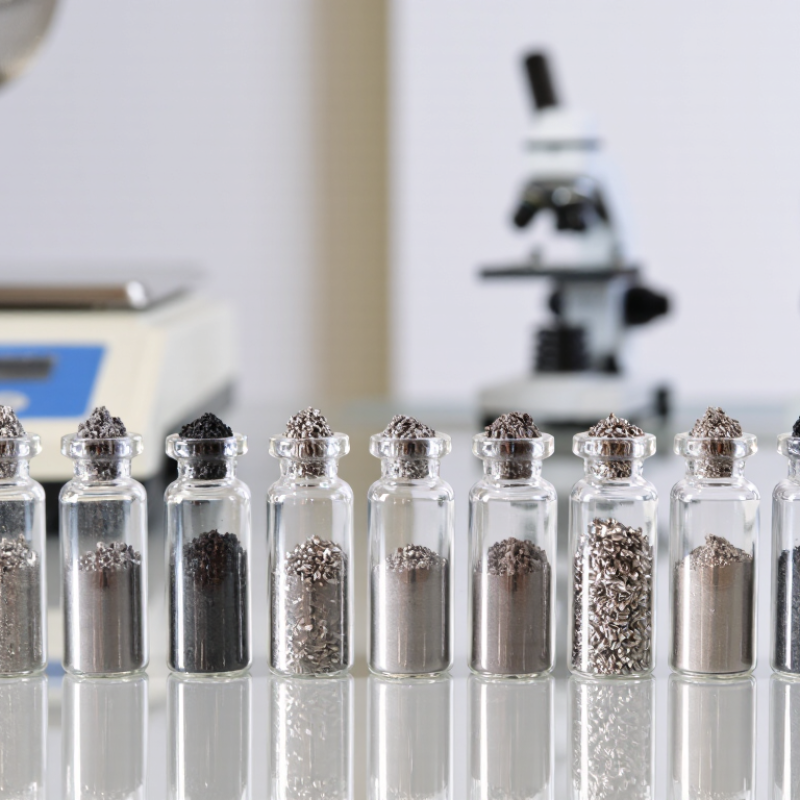
Choosing a Stainless Steel Metal Powder manufacturer takes more than comparing prices or browsing polished product pages. Particle size distribution, chemistry, flowability, oxygen content, and batch consistency can shape print quality and final part performance. A powder that looks uniform in a sample vial may behave differently across a full production run. Details matter.
Powder-metallurgy researcher Randall M. German has written extensively about how powder characteristics and processing conditions influence sintering. In paraphrase, his work offers a useful reminder: powder selection and process design should be evaluated together. This is a paraphrase, not a direct quotation. That distinction matters when technical claims guide purchasing decisions.
This guide introduces ten manufacturers for buyers to investigate, not a universal ranking. Compare published specifications with your own application, whether you need fine spherical powder for additive manufacturing or a different grade for pressing and sintering. Ask for current certificates of analysis, particle-size data, traceability details, and representative test results. Then check whether the supplier can support your required alloy and production volume. Ask about lead times, too.
There is no perfect shortlist. Some product information may be incomplete, and supplier capabilities can change. Treat each entry as a starting point. A careful review of documentation, sample performance, and technical support can reveal more than a brochure ever will.
Stainless steel powder grades are not interchangeable. 316L is commonly selected for corrosion resistance in marine hardware, chemical equipment, and medical components. Its molybdenum content helps resist pitting, but surface finish and exposure conditions still matter. 304L suits general-purpose parts where lower corrosion demands and broad process familiarity guide selection. For both grades, ask manufacturers for chemistry, particle-size distribution, oxygen content, and lot-specific certificates—not just a grade label. Small differences matter.
17-4 PH and 15-5 PH are precipitation-hardening grades designed for higher strength after suitable heat treatment. 17-4 PH is widely used for strong, rigid parts; 15-5 PH can be considered where toughness and more uniform properties are priorities. Actual performance depends on build orientation, porosity, and post-processing, so published values should be checked against test conditions. The comparison is imperfect: a powder data sheet cannot predict every printed part. ASTM International standards provide frameworks for additive manufacturing materials and process qualification, while the Wohlers Report 2024 estimated the global additive manufacturing industry at $20.035 billion in 2023. That figure covers the whole industry, not stainless powder alone. When comparing suppliers, request representative test coupons and traceability records, then verify them under your own process conditions.

Choosing among the 10 best stainless steel powder manufacturers requires more than checking price or catalog size. Atomization technology controls particle shape, oxygen content, flowability, and final part density. Gas atomization uses nitrogen or argon to create mostly spherical particles. It suits laser powder bed fusion and other precision processes. Water atomization costs less, but produces more irregular particles and often higher oxygen levels. Plasma atomization can deliver highly spherical, clean powder, although equipment costs remain substantial.
The Wohlers Report 2024 valued the global additive manufacturing industry at about 20.0 billion US dollars in 2023, with 13.5% annual growth. That expansion increases demand for stable stainless steel powder specifications. Manufacturers should provide batch-level certificates, sieve analysis, Hall flow, apparent density, and oxygen measurements. ASTM testing methods improve comparison, but certificates alone are not enough. Real powder trials still matter. A perfect ranking is impossible.
Tips:
Request samples from the same atomization route used for production. Inspect satellite particles under microscopy. Compare powder reuse behavior, not only fresh-powder flow. For water-atomized grades, ask about drying and deoxygenation controls. For gas or plasma routes, check inert-gas quality and nozzle maintenance records. Small differences can change recoater behavior, surface roughness, and porosity. Some published data looks impressive, but it may not match your machine, alloy condition, or layer thickness.
Choosing among the 10 best stainless steel metal powder manufacturers requires more than comparing price or catalog size. Powder quality begins with measurable evidence. ISO 13320 supports laser diffraction analysis for particle size distribution, a critical check for flowability and packing. Ask for D10, D50, and D90 values, not vague terms like “fine powder.” Traceability matters. Each lot should connect test results with production records, handling conditions, and sampling methods.
ASTM F3184 helps buyers assess stainless steel powders intended for powder bed fusion processes. The standard encourages attention to powder characteristics, processing controls, and resulting material performance. A reliable manufacturer should provide chemistry data, oxygen and nitrogen levels, morphology images, and apparent density results. Spherical particles usually flow better, but satellites and irregular shapes can still affect recoating. Practical experience shows that two powders with similar size ranges may print differently.
AM powder specifications should also address reuse policies, storage humidity, sieving, and contamination limits. Look for certificates from competent laboratories, while checking whether the reported method matches your machine and alloy grade. ISO 13320 results can vary with dispersion settings. That detail is easy to overlook. I would also request retained samples and independent verification for critical applications. No supplier is perfect; unclear sampling plans and incomplete requalification records deserve careful questions before approval.
| No. | Evaluation Dimension | What to Request or Check | Relevant Standard or Reference | Why It Matters |
|---|---|---|---|---|
| 1 | Alloy grade and intended process | Confirm the exact stainless steel grade, powder production route, and intended use, such as laser powder bed fusion (LPBF) or binder-based processing. Require a purchase specification that defines applicable limits. | ASTM F3184 covers additive-manufactured 17-4 PH stainless steel produced by powder bed fusion. | Powder requirements depend on both alloy and manufacturing process; a grade name alone does not define every powder acceptance criterion. |
| 2 | Particle-size distribution (PSD) | Request the measurement method and the reported D10, D50, and D90 values, along with the agreed particle-size range. Commercial AM powders may be offered in ranges such as 15–45 μm or 20–63 μm; these are examples, not universal acceptance limits. | ISO 13320 describes particle-size analysis by laser diffraction. | PSD can affect powder spreading, packing, and process stability. Results are meaningful only when the method and sampling procedure are stated. |
| 3 | Chemical composition | Request a lot-specific certificate of analysis listing the alloy elements and applicable acceptance limits. For 17-4 PH powder-bed fusion material, check the relevant requirements in the agreed specification and ASTM F3184. | ASTM F3184; applicable alloy or purchase specification. | Chemistry influences corrosion resistance, phase balance, heat-treatment response, and mechanical properties. |
| 4 | Oxygen and other interstitial elements | Ask which interstitial elements are controlled, the test method used, and whether results are reported for each production lot. Set acceptance limits in the purchase specification. | ASTM E1019 includes test methods for determining elements such as oxygen, nitrogen, and hydrogen in steel and related materials. | Interstitial content can affect cleanliness, ductility, and performance; limits depend on the alloy and application. |
| 5 | Particle morphology and surface condition | Request representative microscopy images and a documented inspection approach for particle shape, satellites, agglomerates, and visibly irregular particles. | Use a documented inspection procedure agreed between purchaser and supplier; morphology acceptance criteria should be specified for the application. | Particle shape and surface condition can influence flow, packing, and layer formation. A qualitative image should not be mistaken for a numerical acceptance test. |
| 6 | Apparent density | Request the measured value, test method, sample handling details, and lot identification. Compare results against the buyer’s application-specific specification. | ISO 3923-1 describes determination of the apparent density of metal powders using a funnel method. | Apparent density is a useful powder-handling and packing characteristic, but it is not a substitute for a machine-specific build qualification. |
| 7 | Flowability | Ask for flow-rate results and the test apparatus used. If a powder does not flow through the specified funnel, request the reported outcome rather than an unsupported flow-rate value. | ISO 4490 specifies determination of flow rate using a Hall flowmeter funnel; ASTM B213 is another Hall flowmeter method. | Flowability can help assess handling and powder delivery, but funnel measurements may not directly predict behavior in every AM machine. |
| 8 | Tap density | Request the test method, reported value, and number of taps or other method details required by that procedure. | ISO 3953 describes determination of tap density of metal powders. | Tap density provides a standardized packing-related measurement and can complement, but does not replace, apparent-density and process-specific tests. |
| 9 | Lot traceability and change control | Check that each container is linked to a unique lot, certificate, production date, and documented material identity. Ask how changes to feedstock, process, or testing are communicated. | Define traceability and notification requirements in the quality agreement and purchase specification. | Traceability supports incoming inspection, investigation of build issues, and consistent qualification across powder lots. |
| 10 | Packaging, storage, and safety documentation | Review packaging integrity, labeling, storage instructions, handling guidance, and the current safety data sheet. Agree on requirements for shipment and opened-container storage. | Applicable workplace, transport, and customer requirements; confirm the documents and conditions for the specific powder. | Metal powders can be sensitive to moisture or contamination, and fine combustible powders require appropriate handling controls. |
Selection note: Standards cited here describe test methods or material requirements within their stated scope; they do not certify or rank manufacturers. Confirm the current edition, applicability, test conditions, and acceptance limits with the supplier and your application requirements.
A useful top-10 comparison should separate nameplate capacity from reliable output. Ask whether annual tonnage refers to one alloy, all alloys, or theoretical plant capacity. Small distinctions matter when procurement needs repeatable stainless steel powder, not a broad catalog.
The Wohlers Report 2024 estimated the global additive manufacturing industry at about US$20.0 billion in 2023, an 11.1% annual increase. That market figure signals growing demand, but it does not verify any powder producer’s capacity. Treat it as context, not a supplier score.
D50 is the median particle diameter, not a complete description of a powder lot. ISO 13320:2020 specifies laser-diffraction methods; compare results only when sampling and test methods are disclosed.
For each manufacturer, check D50 alongside the full size distribution, oxygen content, and particle shape. ASTM F3049 offers guidance on characterizing metal powders for additive manufacturing, while oxygen results should identify the analytical method and units.
Look for spherical particles under microscopy, but ask how sphericity is quantified. Claims without a method are hard to compare.
A low oxygen value may matter, yet it should be judged against the alloy and process requirements. That comparison is imperfect.
Request lot-specific certificates and independent test data where possible; published catalog values may not describe the drums actually shipped.
10 Best Stainless Steel Metal Powder Manufacturers?
Selection Metrics: 7.9 g/cm³ Density, PSD, Flowability, and Certifications
Choosing a stainless steel powder manufacturer requires more than comparing prices. A practical shortlist begins with density near 7.9 g/cm³, matching common stainless steel grades. However, quoted density may mean true density, tap density, or apparent density. Ask for the test method. Small differences matter.
Particle size distribution, or PSD, directly affects packing, surface finish, and production stability. Request the D10, D50, and D90 values, not only an average size. For example, excessive fine particles can increase dust and reduce flow. Coarse particles may leave rough surfaces or inconsistent layers. A laser diffraction report helps, but sampling errors can still distort results.
Flowability should be checked with recognized methods, such as Hall flow or Carney flow testing. Ask whether results were measured on fresh, conditioned, or recycled powder. That detail is often overlooked. I would also review certificates for chemical composition, batch traceability, quality systems, and relevant material standards. ISO 9001 supports process control, while application-specific certifications may require stronger evidence. A clean certificate cannot replace independent testing. I have seen polished documents reveal little about handling performance, so retain samples and compare actual batches before approving long-term supply.