What is the Ideal Powder Coating Temperature for Best Results?
In the world of powder coating, achieving the perfect finish often hinges on one critical factor: Powder Coating Temperature. Renowned industry expert, Dr. Laura Martinez, emphasizes, "The right temperature can make or break the adhesion quality in powder coating." This statement underlines the importance of maintaining precise temperature settings during the coating process.
When powder coating, the temperature must be carefully controlled. Different materials may require specific temperature ranges to achieve optimal results. For instance, metal substrates usually work best between 350°F and 400°F. However, overshooting this range can lead to issues such as bubbling or discoloration. It’s essential to remember that not all setups are equal. Variations in equipment and environmental conditions can further complicate this aspect.
Focusing solely on temperature might overlook other vital aspects of powder coating. For example, humidity and surface preparation also play critical roles in achieving a flawless finish. An experienced operator should continuously reflect on these elements to adapt to changing conditions. Ultimately, understanding the nuances of Powder Coating Temperature can unlock the potential for a superior coating experience.
Understanding Powder Coating: The Basics of Temperature Impact
Understanding the basics of powder coating is crucial for achieving superior results. Temperature plays a vital role in the powder coating process. Each type of powder has its ideal curing temperature, typically ranging from 350°F to 400°F. When the temperature is too low, the powder may not fully adhere. This leads to a brittle finish that can chip easily. Conversely, excessive heat can cause the powder to over-cure and lose its vibrant color.
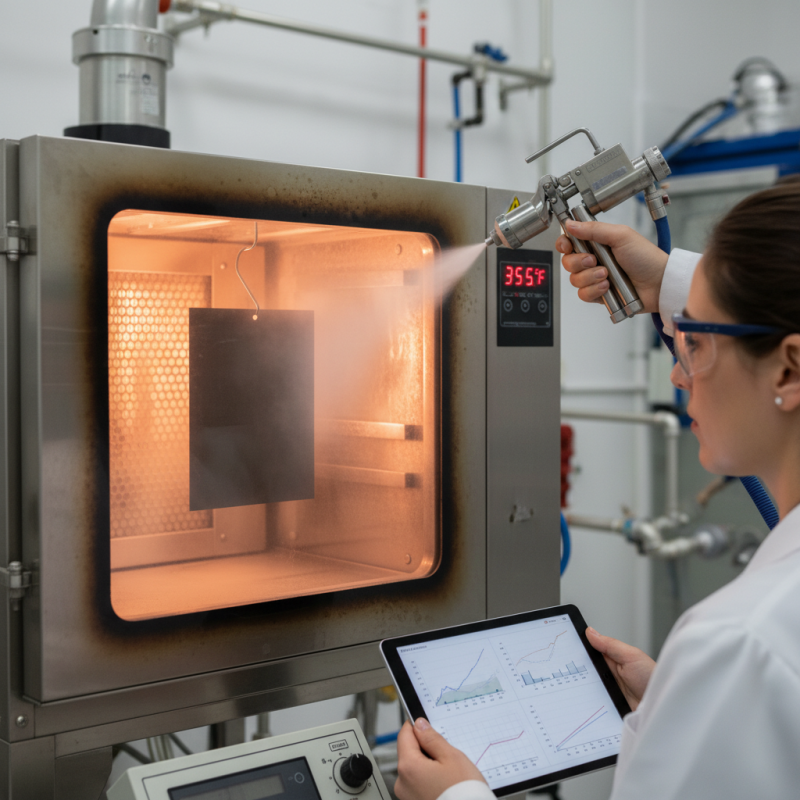
Monitoring the temperature consistently throughout the curing phase is essential. Proper equipment, like infrared thermometers, helps ensure accuracy. Users sometimes overlook this detail, leading to unexpected results. The environment also influences temperature stability. Variations in ambient temperature can affect the curing process. Hence, it is advisable to perform test runs before committing to a full batch. Adjusting settings based on these tests can make a significant difference in the final product.
Ideal Powder Coating Temperatures for Different Materials
This bar chart illustrates the ideal powder coating temperatures for various materials, which can significantly impact the quality and durability of the coatings applied. Proper temperature settings are crucial for achieving optimal results.
Recommended Temperature Ranges for Different Powder Coatings
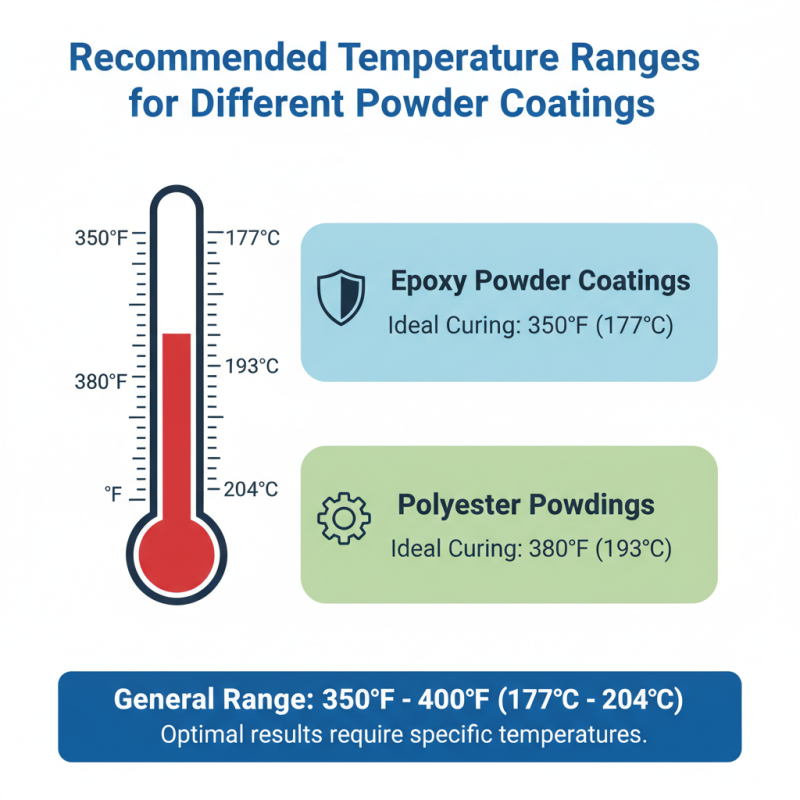
When it comes to powder coating, achieving the ideal temperature is crucial for optimal results. Different powder coatings require specific temperature ranges for proper curing. Generally, the recommended curing temperature ranges from 350°F to 400°F (about 177°C to 204°C). However, variations exist among different formulations. For instance, epoxy powder coatings often cure well at around 350°F, while polyester powders may need temperatures closer to 380°F.
Industry reports indicate that improper temperature settings can lead to several issues. Inadequate curing may result in poor adhesion and a lackluster finish. Too high a temperature might even cause the powder to burn, resulting in discoloration and a compromised coating. A study from the Powder Coating Institute shows that maintaining the correct temperature can enhance durability and resistance to corrosion significantly.
It's important to note that equipment plays a role in temperature consistency. Variations can occur due to oven type and load size. While some tools have built-in thermostats, they may not always provide accurate readings. Thus, a thermal imaging camera can help monitor the surface temperature of the parts being coated. This approach ensures that the material reaches the desired temperature, promoting even curing and a high-quality finish.
The Science Behind Optimal Curing Temperatures in Powder Coating
Curing temperatures play a crucial role in powder coating. Understanding the science behind these temperatures can lead to better results. Generally, the ideal temperature range is between 350°F to 400°F. Achieving this range ensures optimal melting and fusion of the powder particles.
When powder is heated to the right temperature, a chemical reaction occurs. This process forms a durable, smooth finish. However, temperatures that are too low may result in insufficient curing. Conversely, temperatures that are too high can create defects like blistering or burning. It’s important to monitor heat levels closely for consistent quality.
A well-calibrated oven is essential for successful powder coating. Fluctuations in temperature can lead to uneven finishes. Even a minor variation might affect the end product's durability. Testing different items can highlight challenges, requiring adjustments in technique or equipment. Understanding these nuances enhances both experience and end quality.
Factors Affecting Temperature Selection in Powder Coating Applications
The ideal temperature for powder coating typically ranges from 350°F to 400°F (approximately 175°C to 205°C). However, various factors influence this selection. One significant factor is the type of powder being used. Different formulations may require varied curing temperatures to achieve optimal adhesion and finish. For instance, epoxies may perform well at lower temperatures, while polyesters often demand higher heat for effective curing.
The thickness of the coating also impacts temperature choices. Thicker layers need more heat to ensure that the inner portions cure fully. Reports indicate that neglecting this can lead to issues like improper adhesion or brittleness. Environmental factors, such as humidity, further complicate temperature control. High humidity can affect curing, making it crucial to account for local climatic conditions during the application process.
Another factor is the substrate material. Metals require different treatments compared to plastics. Each material has its unique thermal tolerance, impacting how heat is managed in the coating application. Failure to consider these elements can result in flaws that undermine the coating's longevity and appearance. Balancing all these factors demands expertise and experience in the powder coating industry.
What is the Ideal Powder Coating Temperature for Best Results?
| Application Type |
Ideal Temperature Range (°F) |
Curing Time (minutes) |
Film Thickness (mils) |
Typical Substrates |
| General Metal Coatings |
350 - 400 |
10 - 20 |
2 - 5 |
Steel, Aluminum |
| Automotive Parts |
380 - 400 |
15 - 25 |
2 - 4 |
Aluminum, Steel |
| Industrial Equipment |
400 - 450 |
20 - 30 |
3 - 6 |
Steel, Cast Iron |
| Architectural Applications |
350 - 400 |
10 - 15 |
2 - 5 |
Aluminum, Steel |
Tips for Achieving Consistent Results in Powder Coating Temperature Control
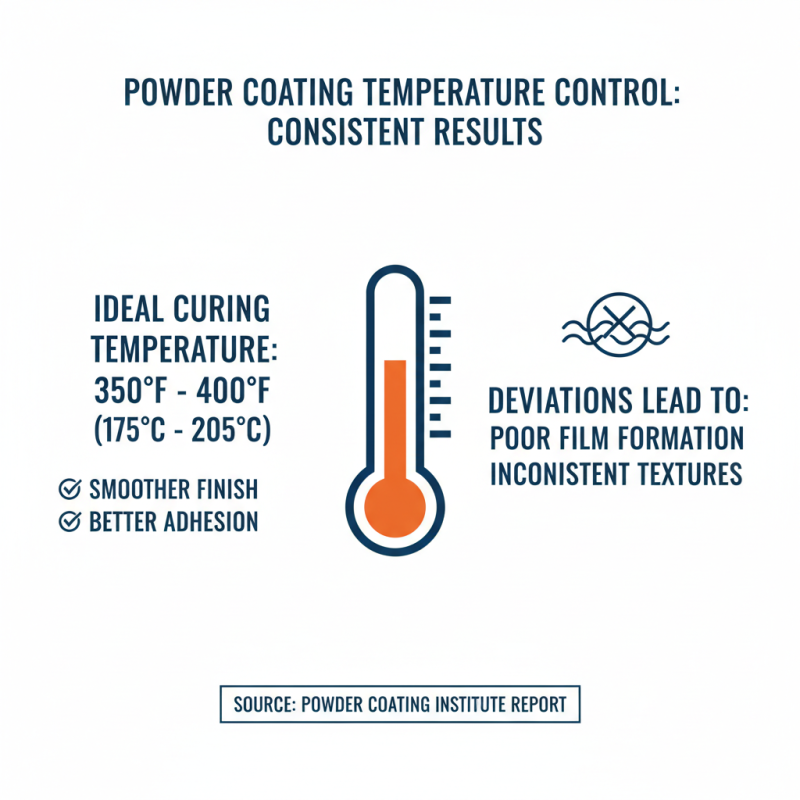
To achieve consistent results in powder coating, temperature control is crucial. The ideal curing temperature typically ranges from 350°F to 400°F (175°C to 205°C). Studies show that maintaining this range can lead to a smoother finish and better adhesion. A report by the Powder Coating Institute highlights that deviations from these temperatures can result in poor film formation and inconsistent textures.
Monitoring temperature is essential throughout the application process. An infrared thermometer can be used to check surface temperatures before curing. Operators often face challenges, like hot spots or uneven airflow in ovens, which can lead to defects. It's important to ensure that the workpieces are preheated adequately; otherwise, the powder may not adhere properly. A common pitfall is not accounting for the thermal mass of the item being coated, leading to inaccurate temperature readings.
Furthermore, ambient conditions around the powder coating facility should not be overlooked. A temperature variance of just a few degrees can impact curing efficacy. Humidity levels can also play a role in the coating's performance. Regular calibration of temperature monitoring equipment is vital for maintaining quality standards in a powder coating line. Neglecting these details can result in rework or surface imperfections, thus affecting overall productivity.