How to Source Cr Powder for Your Business Needs?
Sourcing Cr Powder for your business can be a complex process. It requires careful consideration of quality, reliability, and supplier expertise. Dr. Emily Thornton, a renowned expert in materials science, states, "The purity of Cr Powder directly impacts its application performance." This highlights the need for thorough research and selection when seeking suppliers.
When exploring possibilities, you must evaluate potential sources carefully. A reliable supplier should provide certifications and detailed specifications about their Cr Powder. Pay attention to the particle size, as it affects performance in various applications. Comparing multiple options could help identify the best fit for your business needs.
Establishing relationships with suppliers requires patience and diligence. It is worth investing time in understanding the market. Mistakes can happen, such as choosing a supplier without adequate background checks. Ultimately, sourcing Cr Powder successfully is about building strong partnerships that enhance your product's quality and performance.

Understanding Cr Powder: Properties and Applications
When sourcing chromium powder (Cr powder) for various applications, understanding its properties is crucial. Cr powder exhibits excellent corrosion resistance and high melting points. These characteristics make it invaluable in industries like metallurgy, ceramics, and surface coatings. It plays a vital role in enhancing the durability of steel and other alloys, contributing to their strength and longevity.
Applications of Cr powder are diverse. In metallurgy, it's essential for producing stainless steel. The addition of Cr enhances the material's resistance to rust and wear. In the ceramic industry, Cr powder is used as a colorant and for producing high-performance ceramic components. However, sourcing high-quality Cr powder can be challenging. Impurities in the powder can lead to subpar results in end products.
One must also consider the particle size and morphology of Cr powder. Different applications may require specific characteristics. For instance, fine powders are preferred for high-density compaction, while coarser powders may be suitable for other uses. Finding the right supplier who can guarantee consistent quality and adequate specifications is essential. Researching suppliers and understanding their production processes can help mitigate sourcing issues.
Cr Powder Demand and Application Areas
Identifying Reliable Suppliers for Cr Powder
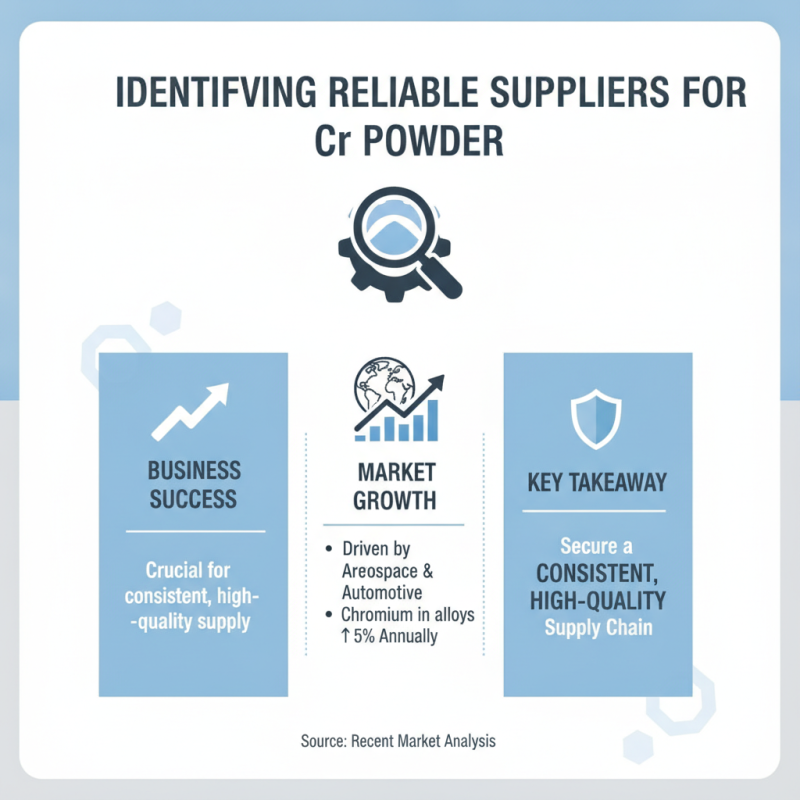
When sourcing Cr powder, identifying reliable suppliers is crucial for your business's success. The global market for chromium powder is projected to grow, driven by demands in aerospace and automotive industries. According to a recent market analysis, the demand for chromium in various alloys is expected to increase by 5% annually. This statistic highlights the importance of securing a consistent, high-quality supply.
Building relationships with suppliers requires careful examination. Look for vendors who provide detailed product specifications and data sheets. Transparency in their sourcing and processing methods is essential. A supplier’s reputation can often be evaluated through ISO certifications, as many industries hold these standards in high regard.
Tips for securing reliable suppliers: always request samples before bulk ordering. This ensures quality consistency. Additionally, leverage industry networks or online platforms to gather feedback about potential suppliers. Relying solely on online claims can lead to challenges later. It's beneficial to visit suppliers in person when possible, as this builds trust and fosters stronger partnerships.
Additionally, check for references from other businesses in your field. This can illuminate a supplier's reliability and service quality. While many suppliers claim to provide the best, the reality may differ. Careful vetting can save significant time and resources in the long run.
Evaluating Quality Standards and Certifications for Cr Powder
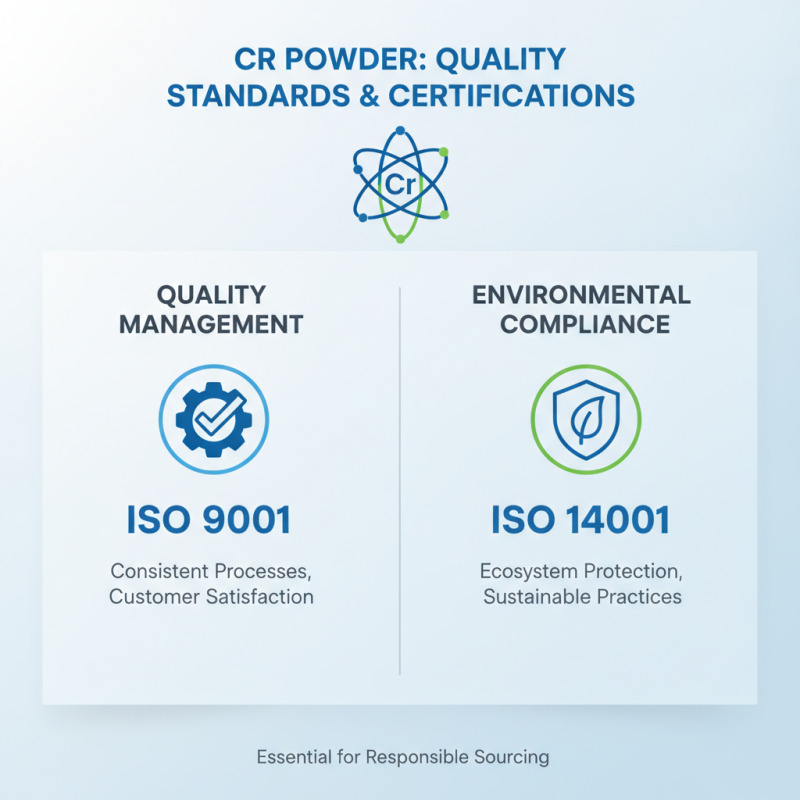
When sourcing chromium (Cr) powder, understanding quality standards and certifications is crucial. The industry often relies on several key certifications. ISO 9001 is a standard for quality management systems. It ensures that the manufacturer has consistent processes. Compliance with environmental regulations is also essential, as chromium mining can impact ecosystems. A reliable supplier should have certifications like ISO 14001, which focuses on environmental management.
Another important aspect is the purity level of chromium powder. Reports indicate that powders should typically have over 99% purity for most applications. This level ensures optimal performance in manufacturing processes. Testing for impurities is necessary. For instance, heavy metals can contaminate chromium powder, which may compromise product integrity.
Additionally, knowing the source of the powder plays a role in its reliability. Countries with stringent mining regulations usually provide higher quality materials. However, not all suppliers may disclose their sourcing information openly. Conducting your due diligence is paramount. Verify certifications and request third-party testing results when possible. This step is critical to avoid future quality issues that might arise.
Assessing Cost Factors and Budgeting for Cr Powder Procurement
When sourcing chromium (Cr) powder for your business, budgeting is crucial. Understand the factors that influence costs. Prices can vary based on quality, purity, and supplier reputation.
Analyzing these factors helps identify a reasonable budget. Don’t overlook additional costs like shipping or customs fees, which can significantly impact your total expenses.
It is wise to compare quotes from multiple suppliers. Look for those who provide transparent pricing and detailed specifications. Occasionally, higher prices indicate better quality. However, this isn't always the case.
Conducting thorough research can reveal hidden gems. Always consider the potential for bulk purchasing discounts as well, which can offer substantial savings.
Bringing in Cr powder necessitates keen financial planning. Reflect on your budget's flexibility. If the market shifts unexpectedly, will you be able to adapt? By continuously monitoring prices and supplier performance,
you can adjust your procurement approach. This dynamic assessment can lead to smarter purchasing decisions in the long run.
Logistics and Storage Considerations for Cr Powder Handling
When dealing with Cr powder, logistics and storage are crucial. Proper handling minimizes contamination and degradation. It is essential to maintain a controlled environment. Temperature and humidity play significant roles. Store Cr powder in a cool, dry location. This prevents clumping and retains its quality.
Packaging is another critical factor. Use airtight containers to avoid moisture and air exposure. Improper packaging can lead to significant losses. Ensure the containers are sturdy and suitable for transport. Label them clearly to avoid mix-ups.
Transportation of Cr powder requires careful planning. Choose reliable carriers who understand handling sensitive materials. Sometimes, delays occur, leading to potential risks. It’s wise to have contingency plans. Training staff on proper handling techniques is essential too. Evaluate your logistics regularly. This ensures efficiency and safety standards are maintained.