Leave Your Message


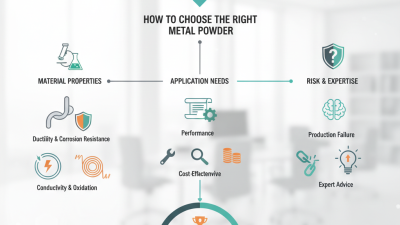
Choosing the right Metal Powder supplier can determine whether a production line runs smoothly or quietly accumulates expensive failures. Particle shape, size distribution, chemistry, flowability, and moisture can influence packing, feeding, melting, and final part performance. A polished website is not enough.
Professor Randall M. German, a respected powder metallurgy researcher, has emphasized a practical principle: “Powder is not just a raw material; it is the foundation of the process.” That foundation should be tested, documented, and matched to your equipment. Ask suppliers for lot-specific certificates, production records, test methods, and clear limits for oxygen, nitrogen, carbon, and other critical elements. Check whether their analysis uses recognized standards. Small differences matter.
Look closely.
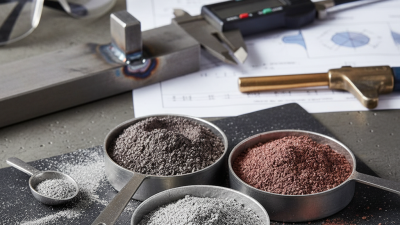
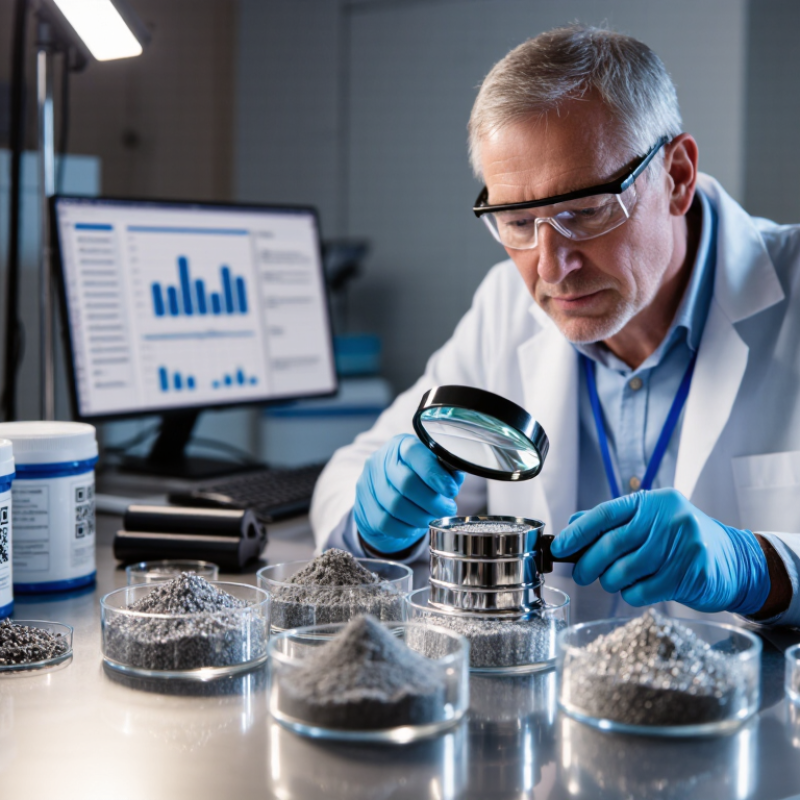
A reliable supplier should explain how it controls atomization, sieving, blending, storage, and packaging. Request representative samples, then evaluate them under your actual processing conditions. Measure flowability, apparent density, particle distribution, and powder reuse behavior where relevant. A supplier may offer an attractive price, yet inconsistent lots can create porosity, rough surfaces, weak bonding, or rejected batches. That cost appears later.
Experience also deserves attention. Has the supplier supported your alloy, machine, and application before? Can its technical team investigate a failed build without blaming the operator? The answer may be imperfect. No supplier can remove every production risk. However, transparent communication, traceability, responsive testing, and honest limitations create a stronger partnership. The best choice is rarely the cheapest bag of powder. It is the supplier that consistently delivers predictable material and evidence to support every decision.
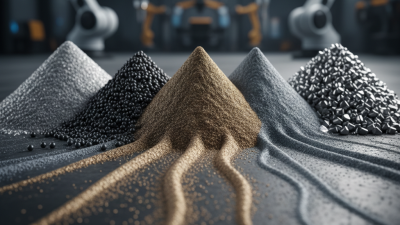
Choosing the right metal powder supplier begins with a precise alloy grade. “Stainless steel” is not specific enough. Request the complete designation, chemical limits, particle size range, and powder morphology. A slight chemistry difference can change strength, corrosion resistance, or sintering behavior.
Your application should guide every technical question. Powder for additive manufacturing may require spherical particles, controlled flowability, and low oxygen content. Pressing and sintering may demand different particle shapes and apparent density. Ask for test data linked to each production lot. I have found that experienced suppliers explain these differences clearly, rather than offering one powder for every process. That matters.
Compliance must be measurable. State the required ASTM or ISO standard, including its current edition and relevant test methods. Ask whether the certificate covers chemical analysis, particle distribution, moisture, contamination, and mechanical performance. Confirm the laboratory’s competence and request full traceability from raw material to shipment. Do not rely on a certificate title alone. Read the actual limits. This is where buyers sometimes make mistakes, including me. I once treated a familiar standard as sufficient without checking the application-specific testing requirements. The paperwork looked complete, but one missing test created delays. A reliable supplier will welcome technical review, provide sample documentation, and explain any deviation before production begins.
| Alloy Grade | Typical Applications | Common Powder-Based Process | Typical Particle-Size Distribution | Critical Powder Characteristics | Relevant ASTM/ISO Requirements to Review | Supplier Documentation and Qualification Evidence |
|---|---|---|---|---|---|---|
| 316L Stainless Steel | Corrosion-resistant components, medical devices, chemical-processing parts, fixtures, and general industrial prototypes. | Laser powder bed fusion; binder jetting; selected powder-bed sintering routes. | Approximately 15–45 µm for many laser powder bed fusion applications; the approved range depends on the machine and process parameters. |
|
ASTM F3184 for stainless-steel powder bed fusion; ISO/ASTM 52907 for metallic powder characterization; ISO/ASTM 52928 for powder reuse management where applicable. | Certificate of analysis, chemical composition, particle-size distribution, morphology images, flowability data, lot traceability, and reuse-history controls. |
| Ti-6Al-4V | Aerospace structures, orthopedic implants, dental components, lightweight brackets, and high-strength corrosion-resistant parts. | Laser powder bed fusion; electron beam powder bed fusion; directed energy deposition. | Approximately 15–45 µm for laser powder bed fusion and approximately 45–105 µm for many electron beam processes. |
|
ASTM F3001 for titanium alloy powder used in additive manufacturing; ISO/ASTM 52907 for powder characterization; application-specific aerospace or medical material specifications may also apply. | Heat or lot identification, chemistry report, gas-content results, particle-size distribution, tap density, flow-rate data, and evidence of contamination control. |
| AlSi10Mg | Lightweight housings, heat exchangers, automotive components, robotics parts, and prototypes requiring good strength-to-weight performance. | Laser powder bed fusion. | Approximately 20–63 µm, subject to machine manufacturer requirements and validated process parameters. |
|
ASTM F3318 for AlSi10Mg powder used in additive manufacturing; ISO/ASTM 52907 for powder characterization; ISO/ASTM 52928 for powder reuse considerations. | Full chemistry, particle-size analysis, apparent and tap density, flowability, morphology, oxygen or hydrogen data where required, and storage-condition records. |
| Inconel 718 | Aircraft engine hardware, gas-turbine components, fasteners, tooling, and parts exposed to elevated temperature and mechanical stress. | Laser powder bed fusion; electron beam powder bed fusion; directed energy deposition. | Approximately 15–45 µm for many laser powder bed fusion systems; coarser distributions may be used for other processes. |
|
ASTM F3055 for nickel alloy powder used in additive manufacturing; ISO/ASTM 52907 for powder characterization; customer or aerospace specifications may impose additional limits. | Chemical analysis, particle-size distribution, powder morphology, flowability, density, gas-content data, manufacturing route, lot traceability, and nonconformance history. |
| Inconel 625 | Marine equipment, chemical-processing components, exhaust systems, heat-resistant tooling, and corrosion-resistant industrial parts. | Laser powder bed fusion; directed energy deposition; some cold-spray applications. | Approximately 15–45 µm for many laser powder bed fusion applications; confirm the required range with the equipment qualification. |
|
ASTM F3056 for nickel alloy powder used in additive manufacturing; ISO/ASTM 52907 for powder characterization; process-specific qualification requirements should be added. | Certificate of analysis, particle-size distribution, morphology, apparent density, flowability, powder-production method, packaging details, and traceability to the production lot. |
| CoCrMo Alloy | Dental frameworks, orthopedic components, wear-resistant parts, high-temperature fixtures, and medical or industrial components requiring high hardness. | Laser powder bed fusion; electron beam powder bed fusion; selected binder-jet processes. | Approximately 15–45 µm for many laser powder bed fusion systems. |
|
ASTM F3213 for cobalt-28-chromium-6-molybdenum powder used in additive manufacturing; ISO/ASTM 52907 for powder characterization; medical applications require additional regulatory controls. | Chemistry certificate, particle-size distribution, gas-content results, morphology, density, biocompatibility-related documentation where applicable, and complete lot traceability. |
| Maraging Steel 18Ni300 | Tooling inserts, molds, conformal-cooling components, high-strength fixtures, and production parts requiring post-build aging treatment. | Laser powder bed fusion. | Approximately 15–45 µm, depending on the qualified machine, layer thickness, and recoater configuration. |
|
ISO/ASTM 52907 for powder characterization; the applicable material specification for the selected maraging-steel grade; ISO/ASTM 52904 and process-specific qualification controls where applicable. | Heat-lot certificate, chemistry, particle-size distribution, flowability, density, heat-treatment recommendations, mechanical-property data, and powder reuse limits. |
| Copper and Copper Alloys | Electrical connectors, induction coils, heat sinks, thermal-management components, and high-conductivity prototypes. | Laser powder bed fusion with suitable wavelength and power settings; directed energy deposition for selected geometries. | Approximately 15–45 µm for many laser powder bed fusion systems, although process-specific distributions vary significantly. |
|
ISO/ASTM 52907 for powder characterization; the applicable copper-alloy composition specification; ISO/ASTM 52904 or equivalent process-quality requirements where relevant. | Conductivity or resistivity data, chemical analysis, oxygen content, particle-size distribution, morphology, density, flowability, and evidence that the powder is qualified for the intended laser system. |
| Alloy Grade Definition | Prevents substitution between similar grades with different chemistry, heat-treatment response, corrosion resistance, or mechanical performance. | Applicable to every powder-based manufacturing route. | Must match the validated machine and process window rather than a generic catalog range. | Specify nominal composition, permitted impurities, powder production method, virgin or reused status, and any customer-specific limits. | Identify the exact ASTM, ISO, AMS, medical, aerospace, or internal specification and confirm the required revision level. | Require a signed certificate of analysis, lot number, traceability statement, safety data sheet, country of origin where required, and change-notification procedure. |
| Application and Risk Assessment | Determines whether standard commercial powder data are sufficient or whether full qualification and regulatory evidence are required. | Applicable to prototypes, production parts, medical devices, aerospace parts, and safety-critical components. | Define acceptable limits for size distribution, oversize particles, fines, moisture, and oxygen before purchasing. | Consider required strength, fatigue life, corrosion resistance, conductivity, surface finish, density, and post-processing requirements. | Link the powder specification to the applicable part, process, and quality-management requirements; do not treat a general ASTM/ISO reference as complete part qualification. | Review sample inspection reports, process-capability data, nonconformance records, audit results, packaging validation, shelf-life information, and technical support capability. |
| Purchasing recommendation: Approve a supplier only after the alloy grade, application, particle-size range, chemistry limits, powder reuse policy, testing methods, ASTM/ISO revision, documentation package, and lot-traceability requirements have been agreed in writing. Standards provide a framework, but the final acceptance limits should be based on the qualified machine, process parameters, part design, and end-use risk. | ||||||