What Are Powder Alloys and How Are They Used?
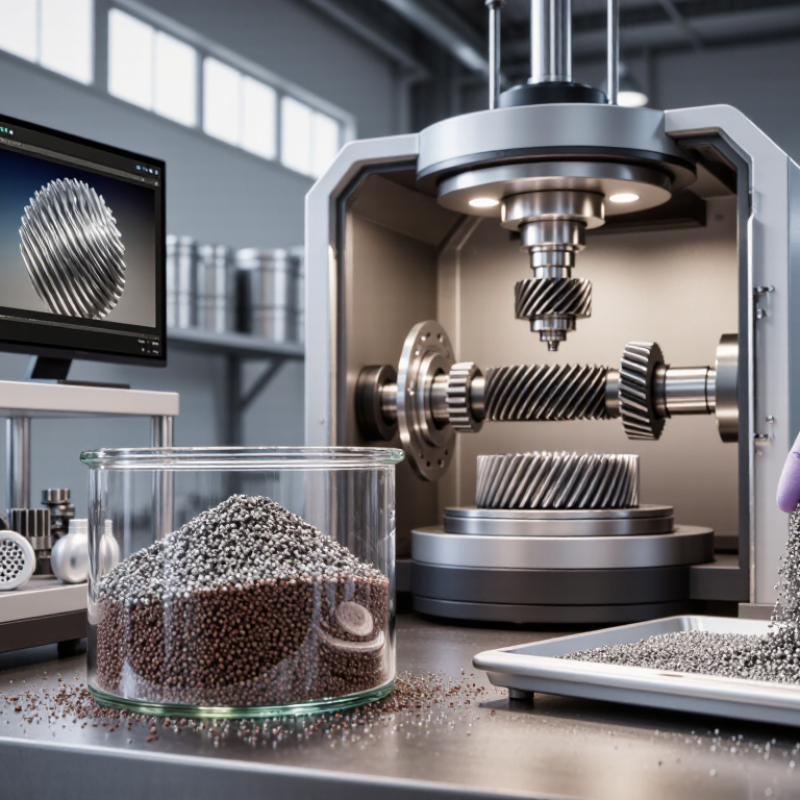
Powder Alloys are engineered metal powders designed for controlled shaping, heating, and consolidation. They support components in aerospace, automotive, medical, energy, and additive manufacturing applications. Tiny particles can become dense gears, porous filters, turbine parts, or customized implants.
Market data shows growing industrial interest. Fortune Business Insights valued the global powder metallurgy market at approximately USD 7.56 billion in 2023. Its report projects the market to reach about USD 11.93 billion by 2032. Grand View Research also identifies transportation, healthcare, and electronics as important demand sectors. These figures describe powder metallurgy broadly, not Powder Alloys alone. That distinction matters.
Randall M. German, a recognized powder metallurgy researcher, wrote, “Powder metallurgy is the art and science of producing useful engineering components from powders.” His statement captures the field’s balance between materials science and manufacturing discipline. Alloy chemistry, particle size, flowability, compaction pressure, and sintering temperature all influence final performance. A 20-micrometer powder does not behave like a 200-micrometer powder. Small changes can create large defects.
Technical standards from ASTM International and guidance from the Metal Powder Industries Federation help manufacturers evaluate density, tensile strength, porosity, and dimensional stability. Still, no report removes every uncertainty. Published market estimates often use different definitions, regions, and forecasting methods. Readers should examine the methodology before accepting impressive growth claims. This article explores what Powder Alloys are, how they are produced, and where their practical advantages may justify their cost.
What Powder Alloys Are and How They Are Made
What Are Powder Alloys and How Are They Used?
What Powder Alloys Are and How They Are Made
Powder alloys are metallic materials formed from extremely small particles. Each particle can contain several elements, such as iron, nickel, chromium, or aluminum. Their controlled chemistry supports strong, heat-resistant, and wear-resistant components.
Manufacturing often begins with melting selected metals in a controlled furnace. The liquid alloy then passes through a narrow opening. High-pressure gas or water breaks it into droplets. These droplets cool into powder particles. Gas atomization usually creates rounded particles, while water atomization produces more irregular shapes. Particle shape affects flow, packing, and later processing.
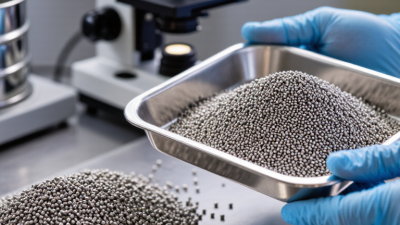
Some powders are made through mechanical alloying. Powerful mills repeatedly collide metal particles until their structures combine. The powder is then sieved to remove oversized grains. Technicians may also apply heat treatment to improve consistency. Quality checks measure particle size, chemical composition, moisture, flow rate, and contamination.
A small error matters.
Powder alloys are used in additive manufacturing, metal injection molding, thermal spraying, and compacted parts. They can form intricate channels or reduce material waste during production. However, the process is not perfectly uniform. Particles may vary slightly in shape or chemistry. Experienced engineers therefore adjust pressure, temperature, and mixing time for each application. Better control usually means better performance, but production still requires careful testing and honest review.
Key Properties of Powder Alloys
Powder alloys are engineered metal powders formed into useful components through pressing, sintering, and sometimes heat treatment. Their key properties begin with composition control. Small changes in carbon, chromium, nickel, or copper can alter hardness, strength, corrosion resistance, and thermal behavior. Particle size and shape also matter. They influence powder flow, packing density, surface finish, and final dimensions. That sounds simple. It is not. Porosity deserves attention because it reduces weight but may weaken fatigue performance. It can also hold lubricants, which benefits moving parts such as bushings. A practical quality check should measure density, hardness, and dimensional consistency across several samples.
Powder alloys are used in gears, cutting tools, filters, electrical contacts, and wear-resistant machine parts. Stainless grades can perform well in damp environments, while harder compositions suit abrasive service. Some porous alloys support self-lubricating designs. Others provide controlled filtration through connected pores. Designers should not treat hardness as the whole answer. A very hard component may crack under sudden impact, while a slightly softer structure may absorb stress more effectively. Trade-offs remain. Testing should reflect real loads, temperatures, vibration, and humidity. Laboratory results can mislead when production pressure or sintering atmosphere changes. Careful engineers compare test data with service evidence, then adjust the alloy or processing method when the first design is not reliable enough.
Main Types of Powder Alloys
What Are Powder Alloys and How Are They Used?
Main Types of Powder Alloys
Powder alloys are metallic powders engineered for pressing, sintering, additive manufacturing, or thermal spraying. Their composition controls strength, corrosion resistance, density, and melting behavior. The boundaries are not always clean. A powder can belong to several practical categories.
Ferrous powder alloys remain widely used in gears, bushings, filters, and structural parts. Iron-based blends often include carbon, copper, nickel, or molybdenum. According to the Metal Powder Industries Federation’s 2024 industry data, automotive applications continue to represent a major share of North American powder metallurgy demand. That reflects high-volume production, not universal suitability.
Nickel-based powders serve turbine, chemical-processing, and high-temperature applications. They retain strength when ordinary steels soften. Cobalt-based alloys resist wear and heat, making them useful for cutting surfaces and medical components. Aluminum and titanium powders offer lower weight, but their flow, oxidation, and cost require careful control. Copper-based powders provide strong electrical and thermal conductivity.
There are trade-offs.
A 2024 Grand View Research assessment projected continued growth in the global metal powder market, supported by additive manufacturing and advanced production. However, market forecasts vary by scope and measurement method. ASTM B243 terminology also distinguishes powder characteristics such as particle size, shape, and apparent density. These details matter during qualification. In practice, engineers should test powder chemistry, flowability, porosity, and final-part fatigue performance, rather than relying only on an alloy name.
How Powder Alloys Are Used in Industry
Powder alloys are metal materials produced as fine, controlled particles. Their small size allows manufacturers to shape metals with less waste and greater design freedom. In industry, these powders support additive manufacturing, metal injection molding, and powder metallurgy. They also serve in thermal spraying, where heated particles create protective coatings on machine surfaces. The process is precise, but not effortless.
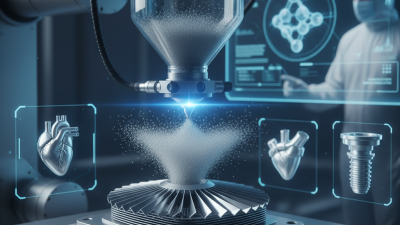
In additive manufacturing, engineers spread thin powder layers and fuse selected areas with heat. This method can produce lightweight aerospace brackets, medical components, and complex cooling channels. Powder metallurgy presses alloy particles into molds before sintering them in a controlled furnace. This approach is common for gears, bushings, filters, and structural parts. Metal injection molding suits small, detailed components made in large quantities.
Performance depends on particle size, shape, purity, and flow behavior. Even slight variation may cause pores, cracks, or uneven density. Quality teams often test chemical composition, particle distribution, moisture, and final strength. A practical lesson from production trials is simple: powder handling matters as much as the alloy formula. Clean storage and steady humidity control can prevent expensive defects. The method is not magic. Some parts still require machining, heat treatment, or surface finishing. Engineers must compare energy use, tooling costs, recycling rates, and inspection demands before selecting powder alloys. That decision can remain imperfect when production data is limited.
What Are Powder Alloys and How Are They Used?
Powder alloys are metal materials produced as fine particles for processes such as additive manufacturing, metal injection molding, press-and-sinter production, binder jetting, and thermal spraying.
Typical particle-size ranges: Metal injection molding uses the finest powders for molding complex shapes, while press-and-sinter and thermal-spray processes generally use coarser particles to support flow, compaction, or deposition.
Benefits and Limitations of Powder Alloys
Powder alloys are fine metal particles blended or atomized for manufacturing. They support powder metallurgy, thermal spraying, and metal additive manufacturing. Their main benefit is design control. Engineers can tune composition, particle size, and sintering temperature for specific performance. This enables lightweight lattices, wear-resistant surfaces, and complex internal channels. The Wohlers Report 2024 valued the global additive manufacturing industry at 20.035 billion dollars in 2023. It also reported 13.5% annual growth. That momentum suggests growing industrial confidence, although growth alone does not prove every application is economical.
Limitations can appear on the factory floor. Irregular particles may flow poorly through a powder bed. Moisture and oxygen can change surface chemistry. Trapped pores may reduce fatigue strength. Recycling powder also needs testing, not guesswork. The International Energy Agency’s Global Critical Minerals Outlook 2024 reported that one country supplied about 65% of refined lithium and 75% of refined cobalt. Such concentration can increase cost and supply risk for alloy systems using these materials. The trade-off is easy to underestimate. A technically strong alloy may still fail procurement, qualification, or repeatability checks.
Tips: Specify particle size distribution, oxygen limits, and recycling rules before production. Validate density, tensile strength, and fatigue performance on finished parts. Keep batch records. Small differences can become expensive defects. Also, challenge the material choice early; a conventional alloy may remain simpler, cheaper, and more reliable.