China Top 10 Additive Manufacturing Powder Manufacturers
China’s additive manufacturing market is moving from experimental printing toward qualified, repeatable production. Within this shift, Additive Manufacturing Powder has become a decisive factor. Particle size, morphology, flowability, oxygen content, and chemical consistency can influence every layer. Small differences matter.
Dr. Mohsen Seifi, ASTM International’s Vice President of Global Advanced Manufacturing Programs, has stated, “Materials are the key to the future of additive manufacturing.” His observation fits the powder sector closely. A reliable powder can support stable recoating, predictable melting, and stronger process control. An inconsistent batch may produce satellites, rough surfaces, or hidden porosity.
This China Top 10 Additive Manufacturing Powder Manufacturers overview examines companies through practical indicators. These include alloy development, atomization technology, quality systems, powder reuse studies, production capacity, and application experience. Aerospace, medical, automotive, and tooling users often require different performance balances. No single supplier fits every project.
That point deserves emphasis.
A polished product page is not enough. Buyers should request inspection data, lot traceability, particle-size distribution, and relevant certification records. They should also compare actual print results, not only laboratory claims. Some manufacturers show impressive specifications but provide limited independent validation. That is a weakness worth noting.
The companies discussed here represent important capabilities in China’s evolving supply chain. However, rankings can change as technologies, certifications, and customer requirements develop. Readers should treat this list as a research starting point, not a final purchasing decision. Practical trials remain essential. Powder performance must be proven inside the intended machine, alloy system, and production workflow.
Market Scope and Role of Additive Manufacturing Powders in China
China’s additive manufacturing powder market is moving beyond laboratory trials. According to the Wohlers Report 2024, global additive manufacturing revenue reached $20.035 billion in 2023. China contributes through aerospace, medical devices, automotive tooling, and industrial repair. Its role is practical, not merely statistical. Powder enables complex channels, lightweight lattices, and customized parts that conventional machining may wastefully produce.
Market scope depends on more than powder volume. It includes alloy development, atomization, sieving, storage, testing, and powder recycling. A 2023 industry analysis by the China Additive Manufacturing Industry Alliance identified metal materials as a key development area for domestic industrial applications. In production, engineers monitor particle-size distribution, oxygen content, flowability, and apparent density. Small changes can affect layer spreading and pore formation. The powder may look consistent. The printed part may disagree.
Quality data must remain traceable from batch to build chamber. ASTM additive manufacturing standards and ISO 17296-2 provide useful terminology and process guidance, but qualification still requires application-specific testing. Reused powder can reduce material waste, yet repeated thermal exposure may alter chemistry or flow behavior. This remains an imperfect area. Some supply chains report extensive test values, while others provide limited long-term evidence. Buyers comparing China’s top ten powder manufacturers should examine certificates, batch records, sampling methods, and independent validation, rather than relying on production capacity alone.
Key Powder Types and Materials Used in 3D Printing
China Top 10 Additive Manufacturing Powder Manufacturers
Key Powder Types and Materials Used in 3D Printing
Metal powders dominate industrial powder-bed fusion, especially for aerospace, medical, automotive, and tooling applications. Common grades include titanium alloys, nickel-based alloys, aluminum alloys, stainless steel, and maraging steel. Each powder needs controlled particle size, flowability, morphology, oxygen content, and moisture levels. Spherical particles often spread more evenly across the build plate. Poor flow can create thin layers, pores, and weak surfaces.
According to the Wohlers Report 2024, the global additive manufacturing industry reached approximately $20.035 billion in 2023, growing 13.5% year over year. This expansion increases demand for traceable powder production in China. However, price alone cannot define quality. It is a risky assumption. Buyers should review chemical analysis, particle-size distribution, apparent density, tap density, and reuse data. ASTM International standards, including those for metal powder characterization, provide useful testing references.
Polymer powders also support selective laser sintering and related processes. Polyamide 12 remains widely used for functional prototypes and low-volume parts. Polypropylene, TPU, and glass-filled polymers serve more specialized needs. Recycled powder may reduce waste, but repeated heating can change flow behavior and mechanical performance. In practice, powder qualification should include printed test coupons, not only laboratory certificates. Small differences in storage humidity can become visible as rough edges, uneven layers, or inconsistent tensile results.
Evaluation Criteria for China’s Leading Powder Manufacturers
China Top 10 Additive Manufacturing Powder Manufacturers
Evaluating China’s leading powder manufacturers requires more than comparing price lists. Start with powder consistency, because stable particle size affects spreading, melting, and final density. Review morphology through microscopy images, not marketing claims. Spherical particles usually flow better, while satellites may cause uneven powder layers.
Reliable manufacturers provide batch-level certificates, chemical analysis, and traceability records. Check oxygen, nitrogen, moisture, and impurity limits for every delivery. Ask for test data from recent production, not only standard samples. Experience matters too. A capable supplier should explain how atomization settings, sieving, and storage influence powder performance. Independent laboratory verification adds authority, especially for aerospace, medical, and industrial applications. However, a certificate alone proves little. Test samples under your own machine settings.
Tips: Request three production batches. Compare flow rate, apparent density, particle distribution, and surface quality. Record handling conditions carefully. Small storage mistakes can change results.
Supplier evaluation should also include technical support, response time, packaging quality, and complaint handling. Visit the facility if possible. Observe sealed powder rooms, humidity controls, equipment maintenance, and labeling practices. A clean workshop is encouraging, but it is not conclusive evidence. Ask difficult questions about failed batches and corrective actions. No manufacturer is perfect, and honest limitations often reveal stronger quality management. My own evaluation would include a pilot build before long-term purchasing, because laboratory data can differ from production behavior.
China’s Top 10 Additive Manufacturing Powder Manufacturers
China’s Top 10 Additive Manufacturing Powder Manufacturers represent a broad industrial base for metal 3D printing. These manufacturers commonly supply titanium, nickel-based, aluminum, stainless steel, and cobalt-chrome powders. Their products support aerospace components, medical devices, tooling, and energy equipment.
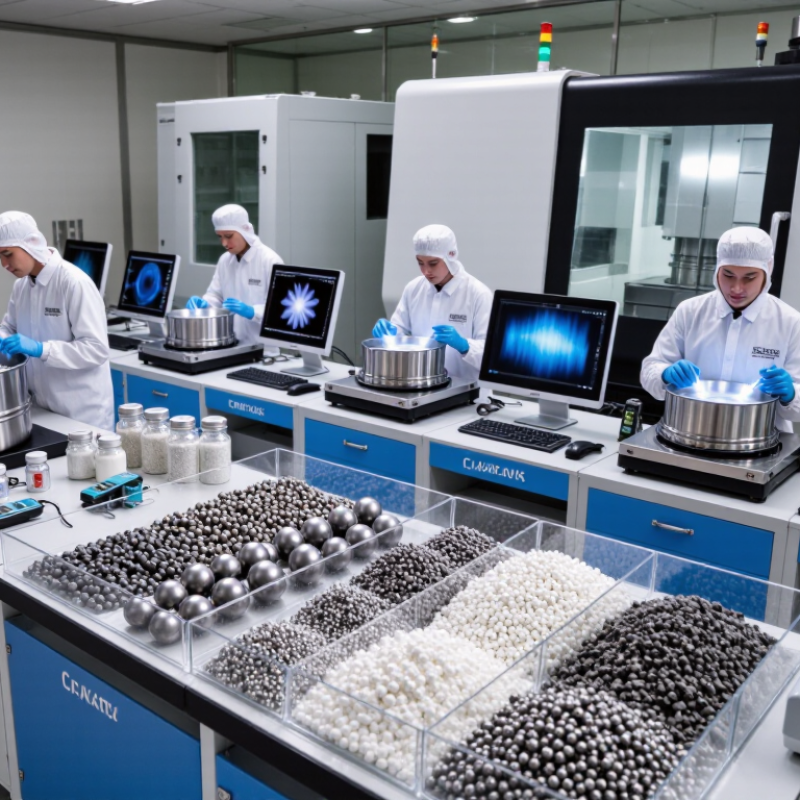
A reliable manufacturer should provide measured particle-size distribution, spherical morphology, controlled oxygen content, and stable powder flow. Gas atomization remains important because it can produce cleaner particles with fewer irregular shapes.
Buyers should also review batch certificates, inspection methods, recycling guidance, and full lot traceability. In practical testing, powder behavior inside the printer matters as much as laboratory data. Poor spreading can create thin layers, rough surfaces, or hidden defects.
The strongest manufacturers usually maintain controlled atomization systems, sieving equipment, and laboratories for chemical and physical analysis. Some offer application support, including parameter trials and post-processing advice. That support can reduce development time, but it should not replace independent validation. No ranking is perfect. A supplier may perform well with titanium yet show weaker consistency with aluminum alloys. Price can also hide costs linked to failed builds, storage, and powder replacement. Engineers should compare several batches under the same printing conditions before approving a long-term supply. Small differences matter.
Quality Standards, Applications, and Industry Trends
China Top 10 Additive Manufacturing Powder Manufacturers
Quality Standards, Applications, and Industry Trends
A reliable review of China’s top ten additive manufacturing powder manufacturers should examine evidence, not marketing claims. Quality begins with controlled atomization, consistent particle size, and clean handling. Traceability matters. Each batch should include a certificate of analysis covering chemistry, oxygen, nitrogen, moisture, and particle distribution. Experienced buyers also inspect powder morphology, flowability, apparent density, and reuse performance.
International projects often reference ISO or ASTM testing methods. However, certification alone cannot prove stable production. Factory audits, sample testing, and production records provide stronger evidence. This practical approach helps engineers compare manufacturers fairly. It also reveals weaknesses that brochures may hide.
These powders support aerospace brackets, medical implants, automotive prototypes, tooling, and energy components. Titanium requires strict control of contamination and oxygen levels. Stainless steel demands predictable corrosion resistance and dimensional behavior. Aluminum powders need careful storage because moisture can affect printing quality. Nickel-based powders remain important for heat-resistant parts.
Current industry trends include finer process control, recycled powder monitoring, automated inspection, and lower-cost domestic supply chains. Digital traceability is becoming more useful, especially for regulated production. Yet some suppliers still report limited long-term data on powder reuse. That gap deserves attention. A manufacturer may provide excellent first-use results, while repeated recycling produces unexpected changes in flow or chemistry. Buyers should test real production conditions before approving a powder for critical components.
China Top 10 Additive Manufacturing Powder Manufacturers - Quality Standards, Applications, and Industry Trends
Representative particle-size windows commonly used for metal additive manufacturing feedstocks. The ranges reflect typical process practice rather than a universal requirement; qualified limits vary by alloy, machine, atomization route, and application.
Quality evaluation typically includes particle-size distribution, morphology, flowability, apparent density, oxygen content, and moisture control. Laser powder bed fusion is widely used for aerospace and medical components, electron beam powder bed fusion for larger high-temperature parts, directed energy deposition for repair and large structures, and binder jetting for scalable batch production. Reference frameworks include ISO/ASTM 52907 and ASTM F3049; actual powder specifications remain application-specific.