Leave Your Message

Top Laser Powder Bed Fusion Process Manufacturers?

Choosing the top Laser Powder Bed Fusion Process manufacturers requires more than comparing machine prices or build volumes. Buyers should examine laser configuration, powder handling, monitoring systems, software, service networks, and validated production results. A large build chamber may look impressive. It may also create unnecessary qualification work.

Terry Wohlers, a widely recognized additive manufacturing analyst, has said, “The future of manufacturing is digital.” His statement reflects a practical reality. Laser Powder Bed Fusion Process equipment now supports aerospace brackets, medical implants, tooling inserts, and demanding energy components. Yet reliable production depends on much more than printing a successful sample. Manufacturers must control powder reuse, oxygen levels, thermal history, surface finish, and dimensional accuracy.

Leading names often include EOS, Nikon SLM Solutions, Renishaw, 3D Systems, Additive Industries, and Velo3D. Each company offers different strengths. Some emphasize open materials and research flexibility. Others focus on automation, repeatability, or production-scale integration. Independent test data matters. So do customer references and documented qualification procedures.

No ranking is perfect.

A technically advanced platform can still disappoint without skilled operators and responsive support. Conversely, a less celebrated system may perform well in a focused application. This guide compares manufacturers through practical evidence, including process stability, machine architecture, software capability, maintenance demands, and industrial experience. The discussion also recognizes uncertainty. Marketing claims can be polished, while factory conditions are rarely polished. Readers should verify performance with representative alloys, realistic geometries, and their own acceptance criteria before making a final investment.
Top Laser Powder Bed Fusion Process Manufacturers?

LPBF Fundamentals: 20–100 μm Layers and 200–1000 W Lasers

Laser powder bed fusion (LPBF) builds parts by selectively melting thin powder layers. Typical layers measure 20–100 μm, thinner than a human hair. Industrial systems commonly use 200–1000 W fiber lasers. These figures describe practical ranges, not universal settings. ISO/ASTM 52900 defines LPBF terminology for clearer technical comparisons. A higher-power laser does not automatically produce better parts.

The 2024 Wohlers Report valued the global additive manufacturing market at $20.035 billion in 2023. This figure includes hardware, materials, software, and services, so it does not represent LPBF equipment alone. NIST process studies link laser power, scan speed, hatch spacing, and layer thickness with melt-pool stability. Small changes can create lack-of-fusion pores, overheating, or rough surfaces. Precision is conditional.

Consider a 40 μm layer under a 400 W laser. It may improve detail, but production time increases sharply. A 100 μm layer can raise throughput, yet stair-stepping and surface roughness may become more visible. Industry reviews in Additive Manufacturing commonly associate qualified LPBF parts with relative densities above 99.9%, depending on alloy and parameters. That benchmark is useful, but not absolute. Powder age, oxygen content, recoater behavior, and thermal history still complicate repeatability. Parameter charts look certain. Real machines are less obedient.

Top Laser Powder Bed Fusion Process Manufacturers? - LPBF Fundamentals: 20–100 μm Layers and 200–1000 W Lasers

Process Dimension Typical LPBF Range What It Controls Practical Selection Considerations
Layer thickness 20–100 μm Vertical resolution, build time, powder utilization, and surface stair-stepping Thin layers generally improve detail and surface finish but increase the number of layers and total build time.
Laser power 200–1000 W per laser Melt-pool energy, scan productivity, and allowable scan speed Higher power can support greater throughput, but process parameters must be matched to material, layer thickness, spot size, and scan strategy.
Laser wavelength Typically near-infrared, approximately 1 μm Powder absorptivity, optical efficiency, and material response Absorption varies by alloy, powder condition, surface state, and temperature; parameter qualification is still required for each material.
Laser spot size Approximately 50–150 μm Feature resolution, energy density, and melt-pool width Smaller spots favor fine features; larger spots can improve productivity and process stability on broader surfaces.
Scan speed Commonly about 200–2000 mm/s Volumetric energy input, productivity, and melt-pool behavior The usable range depends on alloy, layer thickness, hatch spacing, laser power, and qualification results.
Hatch spacing Approximately 50–150 μm Track overlap, density, surface quality, and scan coverage Spacing must provide sufficient overlap between adjacent melt tracks without causing excessive remelting or heat accumulation.
Volumetric energy density Often evaluated around 20–100 J/mm³ Approximate relationship between power, speed, hatch spacing, and layer thickness It is a screening metric rather than a complete process model; identical values can produce different results with different scan strategies.
Powder particle size Commonly approximately 15–63 μm Flowability, packing density, recoating behavior, and layer uniformity Particle-size distribution should be compatible with the selected layer thickness and recoater design.
Build environment Inert argon or nitrogen atmosphere; oxygen often controlled below 0.1% Oxidation control, powder safety, and repeatability Required oxygen limits vary with alloy and qualified process conditions; monitoring and controlled gas flow are essential.
Build temperature management Preheating may range from ambient conditions to several hundred °C Residual stress, distortion, cracking risk, and interlayer thermal history The appropriate temperature depends strongly on material chemistry, part geometry, and qualification requirements.
Typical relative density Approximately 99% or higher for well-qualified parameter sets Internal soundness and mechanical performance potential Density alone does not guarantee performance; defect type, surface condition, microstructure, and post-processing also matter.
Common process defects Lack of fusion, keyholing, balling, porosity, and distortion Dimensional accuracy, fatigue life, surface quality, and reliability Defect prevention requires coordinated control of energy input, powder quality, thermal conditions, recoating, and scan strategy.
Post-processing requirements Stress relief, support removal, machining, blasting, heat treatment, or HIP as required Final geometry, surface roughness, residual stress, and fatigue performance The required route should be defined together with the material specification, application requirements, and inspection plan.

Note: Ranges are general LPBF engineering references. Actual qualified values vary by material, machine architecture, optical configuration, part geometry, and applicable industry standards.
How to Compare LPBF Manufacturers by Build Volume, Speed, and Accuracy

Top Laser Powder Bed Fusion Process Manufacturers?

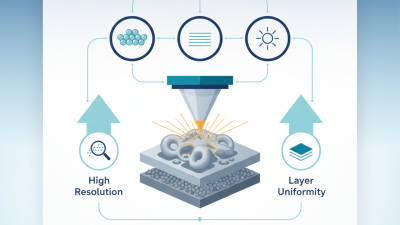
Comparing LPBF manufacturers requires more than reading a machine brochure. Build volume determines part size, nesting efficiency, and production flexibility. A 250 × 250 × 300 mm chamber may suit small components, while larger aerospace structures need far more space. However, unused chamber volume can increase powder consumption and thermal management demands. Wohlers Report 2024 valued the global additive manufacturing industry at 20.035 billion dollars in 2023. That growth increases equipment choice, but it also makes comparison harder.

Speed should be measured in cubic centimetres per hour, not only laser power. Higher power may improve throughput, yet scan strategy, layer thickness, recoater movement, and cooling time remain important. Accuracy also needs a defined reference. ISO/ASTM 52900:2021 establishes common additive manufacturing terminology, but it does not guarantee identical tolerances between systems. Real accuracy depends on material, geometry, orientation, and post-processing. Published tolerances can look impressive. Production results may disagree.

Tips: Request test coupons using your powder and typical wall thickness. Compare build rate, usable volume, dimensional deviation, surface roughness, and failed-build frequency. Ask for measurement reports, not verbal promises. My first comparison mistake was treating maximum speed as daily output. It was not. Also examine service records, calibration routines, and operator training. A smaller platform with stable results may outperform a larger system in real production. Industry forecasts are useful, but factory evidence deserves greater weight.

Leading LPBF Equipment Makers: EOS, Nikon SLM, and 3D Systems

Laser powder bed fusion remains a demanding industrial process, not a simple replacement for machining. The Wohlers Report 2024 valued the global additive manufacturing industry at $20.035 billion in 2023, with 13.5% annual growth. Metal systems contributed strongly, especially in aerospace, medical, and energy production.

Three established equipment makers illustrate the market’s main strengths. One emphasizes mature process libraries and dependable production workflows. Another focuses on high-power lasers, larger build volumes, and industrial automation. The third combines metal printing with software, inspection, and post-processing support. These differences matter on the factory floor. A 400-millimeter build chamber may reduce part nesting limits, while closed-loop monitoring can detect melt-pool changes during a 20-hour build.

Details decide performance.

According to the ASTM International Additive Manufacturing Center of Excellence, qualification requires controlled powder handling, traceable parameters, and repeatable testing. Operators should examine oxygen levels, layer recoating, porosity, and dimensional drift, rather than trusting headline laser power. The 2023 AM Research market analysis also reported continued expansion in metal additive manufacturing, but adoption remains uneven across sectors. That warning deserves attention. A fast machine can still produce expensive failures when support removal, heat treatment, or inspection capacity is ignored. Published data often underrepresents training time and maintenance downtime. Procurement teams should therefore compare usable annual output, not only build speed, laser count, or chamber size.

Industrial Specialists: Renishaw, TRUMPF, Farsoon, and Additive Industries

Industrial laser powder bed fusion manufacturers serve different production realities. Some specialize in precise metal systems for aerospace and medical components. Others focus on large build volumes, automated powder handling, or flexible factory integration. Experienced suppliers usually provide validated parameter sets, process monitoring, and responsive service teams. These details matter more than impressive brochures. A reliable machine should maintain stable laser power, controlled chamber temperature, and consistent layer recoating during long builds.

Tips: Ask for sample parts made with your alloy and target geometry. Inspect surface finish, internal density, support removal, and dimensional accuracy. Request service response times and spare-parts availability. A factory visit can reveal powder storage habits, calibration routines, and operator training. Small details often expose major risks.

No platform is perfect. I have seen excellent builds delayed by software updates, unfamiliar powders, or weak post-processing plans. Buyers should compare annual operating costs, not only machine prices. Check whether the manufacturer supports open material strategies, secure data transfer, and integration with inspection equipment. Industrial specialists should also explain failed-build analysis clearly. Their answers reveal practical maturity. A strong supplier will discuss limitations instead of promising effortless production. The best choice depends on part size, alloy range, production volume, and the team’s technical experience.

Qualification Metrics: ISO/ASTM Standards, Materials, and Productivity Data

Top Laser Powder Bed Fusion Process Manufacturers?

Qualification should begin with standards, not attractive machine photographs. ISO/ASTM 52900 defines essential terminology, while ISO/ASTM 52901 addresses requirements for purchased additive parts. For critical metal powder bed fusion, ISO/ASTM 52904 and ASTM F3303 provide stronger process-control references. These frameworks guide powder acceptance, machine calibration, build records, and inspection planning.

Material qualification needs measurable evidence. Record alloy chemistry, particle-size distribution, morphology, flowability, oxygen content, and powder reuse history. A reused powder batch may look normal but behave differently. Track density, tensile strength, elongation, surface roughness, and defect populations across multiple builds. One successful coupon proves little. Three builds are better, though still not conclusive.

Productivity claims require wider metrics than laser power or deposition rate. Report build time, material utilization, nesting efficiency, changeover time, post-processing hours, yield, and energy per part. The Wohlers Report 2024 valued the global additive manufacturing industry at approximately $20.0 billion in 2023, with 13.5% annual growth. That expansion increases pressure for repeatable throughput, not just faster lasers. The AMPOWER Report 2024 also emphasizes separating equipment performance from total production economics. A qualification review should therefore compare validated parts per day, not headline speed. Some published data remains difficult to reproduce. That is a reason to request raw test conditions.

Top Laser Powder Bed Fusion Process Manufacturers? — Qualification Metrics

Representative metal LPBF productivity ranges by material family. Actual build rates depend on laser power, layer thickness, scan strategy, part geometry, and parameter qualification.

Qualification should be assessed against recognized frameworks, including ISO/ASTM 52900 for terminology, ISO/ASTM 52901 for purchased-part requirements, ISO/ASTM 52904 for metal powder bed fusion in critical applications, ISO/ASTM 52907 for metal feedstock characterization, and ASTM F3303 for metal powder bed fusion processes.

Productivity values are representative published industry ranges in cm³/h rather than manufacturer-specific claims or certification limits.