Top 10 Uses of Nickel Powder for Global Buyers in 2026?
The demand for Nickel Powder is projected to surge in the coming years, driven by its diverse industrial applications. According to a recent market analysis by Grand View Research, the global nickel powder market is expected to reach USD 2.5 billion by 2026. This growth highlights the metal's vital role in sectors such as electronics, batteries, and additive manufacturing.
Nickel Powder has unique properties that make it an essential material in the production of high-performance alloys. A report from Fortune Business Insights indicates that the battery segment alone could see significant growth, fueled by the increasing adoption of electric vehicles (EVs). This transformation in the automotive industry is creating new opportunities and challenges for manufacturers and suppliers looking to meet the rising demand.
Despite its promising prospects, reliance on Nickel Powder is not without risks. The environmental impact of nickel extraction and processing can be concerning. Companies need to adopt sustainable practices to address these issues. Consumers are becoming more aware of ethical sourcing, which could influence purchasing decisions in this evolving market. The future of Nickel Powder will depend on balancing innovation, sustainability, and market demand.

Top Applications of Nickel Powder in Aerospace Manufacturing in 2026
In 2026, the aerospace manufacturing industry will increasingly rely on nickel powder. This material plays a crucial role in aircraft components, providing strength and corrosion resistance. According to market reports, the use of nickel powder in aerospace applications is projected to grow at a compound annual growth rate of 7.5%.
Nickel powder is essential for producing high-performance alloys. These alloys are lightweight yet strong, making them ideal for aircraft structures. A recent study highlighted that nickel-based superalloys are critical for turbine engines, which operate under extreme conditions. Their ability to withstand heat and pressure further emphasizes nickel powder's importance.
Tips: When working with nickel powder, ensure proper storage to maintain its properties. Also, consider the particle size; smaller particles can enhance the sintering process. The aerospace industry must continuously innovate, reflecting on material choices to improve efficiency and reduce environmental impact. Prioritizing research on sustainable practices is necessary.
The Role of Nickel Powder in Energy Storage Solutions and Batteries
Nickel powder is gaining importance in the energy storage sector, particularly in batteries. According to a report by MarketsandMarkets, the nickel market in energy storage is expected to reach $28 billion by 2026. This growth highlights the increasing reliance on nickel for advanced battery technologies, such as nickel-cobalt-aluminum (NCA) and nickel-manganese-cobalt (NMC) chemistries. These batteries are known for their high energy density, which is essential for electric vehicles (EVs) and renewable energy systems.
As energy demands rise, the efficiency of energy storage solutions becomes crucial. Nickel powder contributes to this by enhancing the conductivity and reducing the weight of batteries. In fact, using nickel in battery cathodes can increase capacity by up to 50%. However, sourcing nickel responsibly remains a challenge, given environmental and social concerns tied to mining practices. Buyers need to ensure they are purchasing from sources that adhere to ethical standards.
The trend toward renewable energy also boosts nickel powder's role. China leads the market but faces scrutiny over its mining practices. Companies must critically assess their supply chains. The efficient use of nickel in energy storage is not without flaws, and a sustainable approach is essential. Addressing these challenges will shape the future of nickel in energy storage.
Advancements in Nickel Powder Usage for 3D Printing Technologies
The advancements in nickel powder usage for 3D printing technologies are reshaping various industries. Nickel powder is increasingly recognized for its unique properties. Its high melting point and corrosion resistance make it ideal for producing durable parts. In 2026, we can expect to see more innovative applications that leverage these qualities.
3D printing technologies enable the creation of complex geometries that traditional methods cannot achieve. This benefit is crucial in sectors like aerospace and automotive, where precision is paramount. Furthermore, nickel powder allows for faster production rates, improving overall efficiency. However, there are challenges to address, such as the powder's flowability and particle size distribution, which can affect the final part quality.
Tips: When considering nickel powder for 3D printing, it's essential to evaluate the purity and particle shape. Testing different suppliers can yield better results. Keep abreast of emerging technologies and techniques to enhance your designs. Staying informed about industry standards is vital for success in this evolving field.
Nickel Powder in the Automotive Industry: Innovations and Trends
In recent years, nickel powder has carved a niche in the automotive industry. The shift towards electric vehicles (EVs) has increased demand for materials that enhance battery efficiency. Nickel powder is essential in constructing lithium-ion batteries. Its unique properties contribute to better energy density and longer lifespans. However, not all producers can achieve the required purity and consistency for automotive applications.
Innovations are unfolding with nickel powder applications. New techniques in powder metallurgy are promising more reliable performance in automotive components. Advanced manufacturing processes aim to reduce waste and improve overall sustainability. Yet, challenges remain. The balance between cost and optimal performance is a constant struggle for manufacturers. Exploration into new nickel sources could yield breakthroughs, but the industry's dependence on nickel's availability raises concerns about supply chain stability.
Emerging trends show a growing interest in powdered metallurgy for engine components. This method allows for weight reduction without sacrificing strength. However, the transition to these innovative approaches needs careful consideration. Factors like processing time and energy consumption must be addressed. The automotive sector must adapt swiftly while remaining mindful of environmental impacts. The road ahead for nickel powder in the industry is filled with both potential and obstacles.
Impact of Nickel Powder on High-Performance Alloys in Various Industries
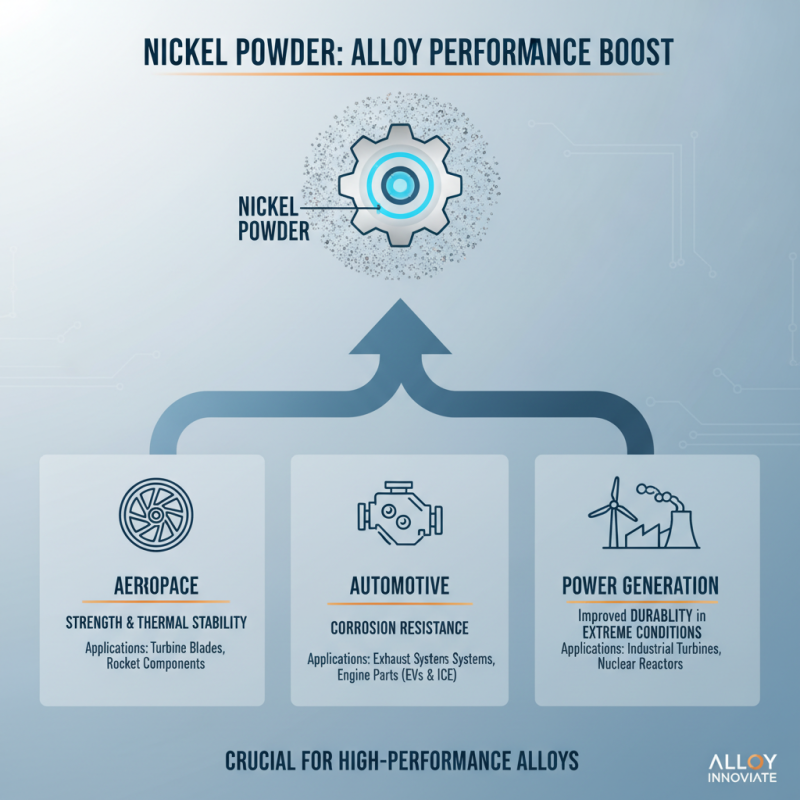
Nickel powder plays a crucial role in the production of high-performance alloys. These materials are essential in various industries, including aerospace, automotive, and power generation. Nickel enhances the strength, corrosion resistance, and thermal stability of alloys. This quality makes it indispensable for components exposed to extreme conditions.
In aerospace, nickel-based alloys are prominent. They withstand high temperatures found in jet engines. Automakers also utilize these alloys for strength and safety in vehicles. While nickel powder is widely praised, its extraction can raise environmental concerns. Manufacturers need to address these challenges responsibly.
Tips: When considering nickel powder, evaluate its sustainability. Explore suppliers focused on eco-friendly practices. Also, stay informed about regulatory changes that may impact production. Researching the end-use applications of nickel alloys will guide better decision-making. Proper analysis leads to smarter choices, even in a rapidly evolving market.