What is Ni Powder and How Can It Benefit Your Business?
Ni Powder has emerged as a pivotal material across various industries. This fine nickel powder contributes significantly to enhancing product performance and reducing manufacturing costs. Businesses that utilize Ni Powder often note improvements in the strength and durability of their products. However, its benefits extend beyond just functionality.
Incorporating Ni Powder into your business processes can lead to notable advancements in production quality. Its unique properties allow for versatile applications, from electronics to automotive manufacturing. Many companies have started to explore these applications, yet some remain hesitant. They wonder if the investment in Ni Powder will yield sufficient returns.
Understanding the potential of Ni Powder is crucial for informed decision-making. While the benefits are clear, challenges still exist. Businesses must consider factors like sourcing and cost-effectiveness before committing. Gaining expert insights into Ni Powder can help businesses navigate these complexities. Embracing this innovative material could be the key to staying competitive in a rapidly evolving market.

What is Nickel Powder and Its Properties?
Nickel powder, a fine metallic powder, is gaining traction in various industries. Its unique properties make it a valuable material. Nickel powder is known for its excellent corrosion resistance. This quality is crucial for products exposed to harsh environments. Additionally, it has high thermal and electrical conductivity. These traits open doors for applications in electronics and aerospace.
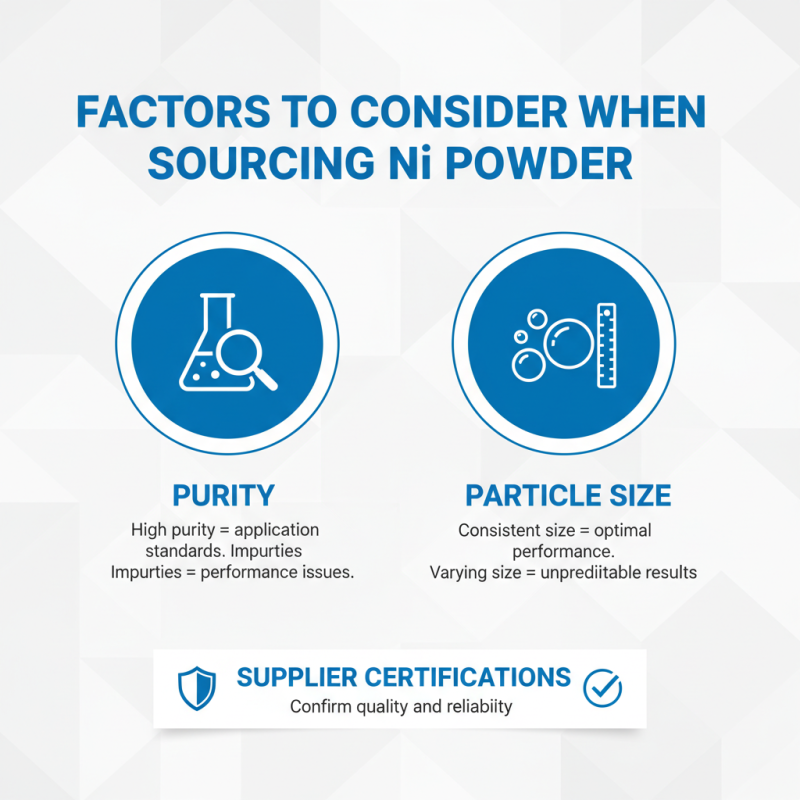
Various forms of nickel powder exist. The size and shape of the particles can significantly influence their behavior. For instance, smaller particles are often more reactive. This reactivity can enhance sintering processes in manufacturing. However, it is essential to control the production process. Inconsistent particle sizes can lead to unpredictable results. Businesses should pay attention to sourcing high-quality nickel powder.
The safety and handling of nickel powder must also be considered. Some workers may have sensitivities to nickel. It is vital to implement proper safety measures. Training personnel about safe handling methods can prevent health risks. Thus, while nickel powder offers numerous benefits, careful attention to its properties and usage is necessary.
Applications of Ni Powder in Various Industries
Nickel powder (Ni powder) is a versatile material used across multiple industries. In metallurgy, its application has seen a significant rise. According to a report by Smithers, the global nickel powder market is expected to grow at a CAGR of around 5.6% from 2022 to 2027. This growth is driven by the increasing demand for lightweight materials in aerospace and automotive sectors. Ni powder is ideal for creating superalloys, which are essential for high-performance applications.
In the electronics industry, Ni powder plays a crucial role in manufacturing conductive pastes. These pastes are key components in producing electronic circuits. As digital electronics continue to advance, the demand for Ni powder is projected to increase. Market research by MarketsandMarkets indicates that the electronic materials market will reach USD 102.8 billion by 2025, with significant contributions from nickel-based pastes.
The chemical and energy sectors also utilize Ni powder extensively. It is used in producing catalysts for hydrogen generation. Research from Grand View Research shows that the hydrogen production market is expected to reach USD 207.3 billion by 2028. However, challenges remain. The sourcing of high-purity Ni powder and dealing with the fine particle size can lead to difficulties in handling and processing. These aspects require ongoing evaluation and innovation in production methods.
Understanding the Applications of Ni Powder in Various Industries
Advantages of Using Nickel Powder for Business Growth
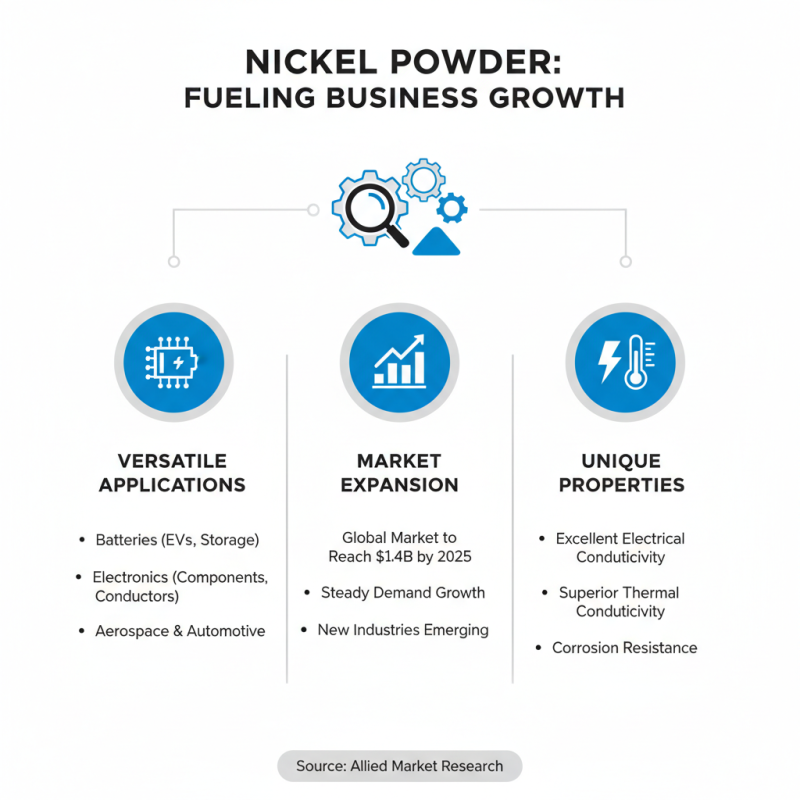
Nickel powder has gained traction in various industries due to its unique properties. It offers excellent thermal and electrical conductivity. This makes it highly effective in manufacturing components for batteries and electronics. According to a report by Allied Market Research, the global nickel powder market is projected to reach $1.4 billion by 2025, indicating a steady demand for this material.
Utilizing nickel powder can enhance product durability. Its use in sintered parts improves performance and reduces wear over time. Companies in the automotive and aerospace sectors increasingly turn to nickel powder for lightweight materials. This shift supports better fuel efficiency. However, investing in nickel powder requires upfront costs. Businesses must evaluate whether the long-term benefits outweigh initial expenses.
Moreover, nickel powder's adaptation in 3D printing technology showcases its potential for innovation. This technique allows for complex designs that traditional methods cannot achieve. As industries evolve, companies must reassess their materials. Traditional manufacturing processes may become obsolete, pushing businesses to explore new options like nickel powder.
Future Trends and Innovations in Nickel Powder Usage
Nickel powder is gaining traction in various industries due to its unique properties. As businesses explore innovative applications, understanding future trends is essential. The growing demand for eco-friendly materials is driving research into nickel powder's role in batteries and renewable energy sources. This trend looks promising, particularly in electric vehicle production.
Tip: Stay updated on industry research to identify potential uses for nickel powder in your field. Research can provide insights into innovative applications.
Another trend is the development of advanced manufacturing techniques, such as 3D printing. Nickel powder can enhance the performance of printed parts. This could lead to cost savings and improved efficiency in production processes. However, companies need to adapt their methods to fully integrate nickel powder.
Tip: Experiment with mixing different particle sizes of nickel powder for varied results. This may yield unexpected benefits and improve material properties.
Despite the advantages, companies should be cautious. The market for nickel powder can be volatile, influenced by mining and geopolitical factors. It’s crucial to have a flexible supply chain and alternative sourcing options. This approach will help mitigate risks associated with reliance on single suppliers.
What is Ni Powder and How Can It Benefit Your Business? - Future Trends and Innovations in Nickel Powder Usage
| Application |
Industry |
Benefits |
Future Trends |
| Energy Storage |
Renewable Energy |
Improved battery efficiency |
Increased use in lithium-ion batteries |
| Additive Manufacturing |
Aerospace |
Lightweight components and reduced waste |
Growth in 3D printing technologies |
| Catalysts |
Chemical Processing |
Enhanced reaction rates |
Development of more efficient catalysts |
| Coatings |
Electronics |
Corrosion resistance and improved conductivity |
Innovation in nanocoatings |
| Batteries |
Automotive |
Longer battery life and quick charging |
Adoption of nickel-rich batteries |