Why Choose Metal Powder Works for Metal Powders?
Choosing a metal powder supplier means evaluating more than catalog price. For additive manufacturing, powder consistency affects handling, spreading, and part repeatability. The stakes are measurable. Wohlers Report 2024 estimated the global additive manufacturing industry at $20.0 billion in 2023, with 11.1% annual growth. That figure covers the wider industry, not metal powder sales alone. It signals a growing production environment, while leaving powder quality as a separate purchasing question.
Metal Powder Works should be assessed through evidence that matters on the production floor. Ask for alloy chemistry, particle size distribution, morphology, flowability, and lot-to-lot documentation. ISO/ASTM 52907:2019 outlines methods for characterizing metal powder feedstock. It offers a useful framework, not a guarantee of supplier performance. Details matter. A sample may flow well in one setup and behave differently in another machine or process. Testing under your actual operating conditions is prudent.
A careful review should also consider traceability, packaging, technical support, and the supplier’s ability to address process questions. No supplier is a perfect fit for every alloy or application. Metal Powder Works may merit consideration when its documentation, material options, and service match your requirements. Verify those points directly, and compare results with your own acceptance criteria. That takes time. It can prevent a costly mismatch between a powder specification and real production needs.
What Metal Powder Works Does in the Metal Powder Industry
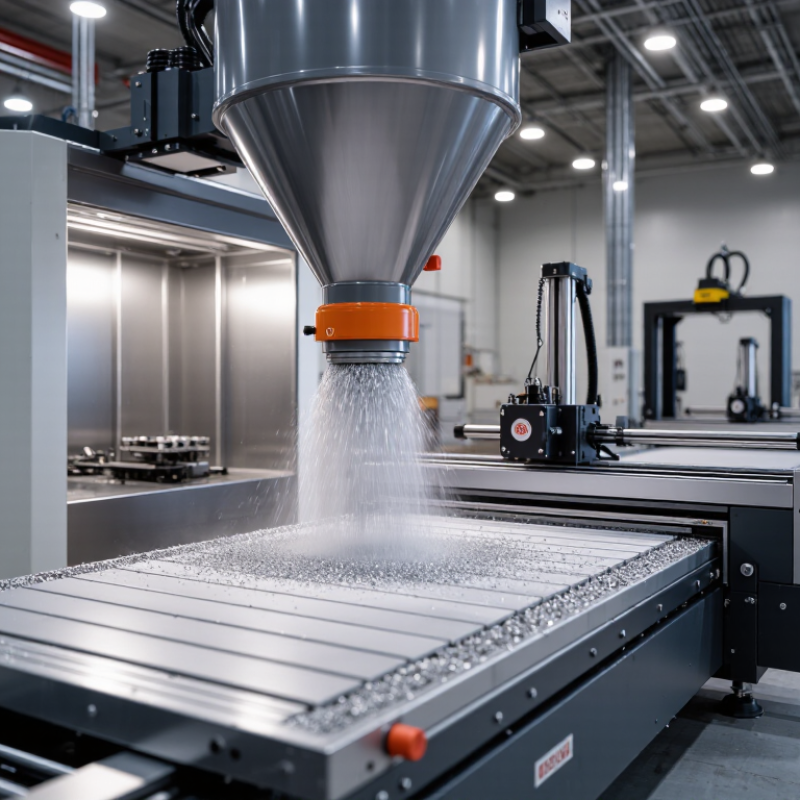
Metal powder producers turn alloy chemistry into controlled feedstock for additive manufacturing, metal injection molding, and powder metallurgy. Their work includes atomization or other powder-making processes, then screening, testing, and documenting each batch. Particle size, shape, flow, and oxygen content can affect how powder spreads across a build plate or fills a mold. Small variations matter.
The Wohlers Report 2024 valued the global additive manufacturing industry at about $20.0 billion in 2023, up 11.1% from 2022. That figure covers the wider industry, not metal powder sales alone. World Steel in Figures 2024 reported 1,888.2 million tonnes of crude steel production in 2023. It shows the scale of steelmaking, but it is not a measure of powder output. A useful proxy, but an imperfect one. Powder suppliers help connect broad metal production to narrower requirements, such as a specified alloy grade, particle-size range, and batch traceability. Results still depend on the process and the customer’s application.
Tips: Check the powder’s test certificate, particle-size distribution, and handling guidance before production. Ask how batch consistency is verified. Even good documentation cannot remove every process variation.
Why Choose Metal Powder Works for Metal Powders? - What Metal Powder Works Does in the Metal Powder Industry
| Industry Dimension |
What the Process Involves |
Why It Matters to Powder Users |
| Powder production |
Metal powders can be produced through methods such as gas atomization, water atomization, or mechanical processing. The suitable method depends on the alloy and intended application. |
Production route influences particle shape, surface characteristics, and how the powder behaves during handling and processing. |
| Particle size distribution |
Powder is commonly screened or classified into specified size ranges. The appropriate range varies by process and equipment. |
Particle size affects packing, flow, layer formation, and the suitability of powder for processes such as additive manufacturing or powder metallurgy. |
| Particle morphology |
Particle shape may be spherical, irregular, or a mixture, depending on the production route and material. |
Shape can influence powder flow, packing density, and the consistency of powder delivery or spreading. |
| Material composition |
Powder chemistry is selected to meet the requirements of an alloy or material specification and may be checked through chemical analysis. |
Composition affects the material properties of the finished component and helps users verify that the powder is appropriate for its intended use. |
| Quality testing |
Depending on the product and application, testing may include particle size analysis, chemical analysis, morphology examination, flow testing, or apparent density measurement. |
Documented, application-relevant testing supports incoming inspection, process control, and traceability. |
| Application fit |
Metal powders are used in processes including additive manufacturing, metal injection molding, press-and-sinter powder metallurgy, and thermal spraying. |
Matching the powder’s alloy, size range, and characteristics to the process helps users assess performance requirements before production. |
| Handling and storage |
Powder handling practices should account for the material’s safety information, sensitivity to contamination or moisture, and the requirements of the specific process. |
Appropriate storage and handling help preserve powder condition and support safe, repeatable use. |
Powder specifications and test methods vary by material, manufacturing process, and end-use requirements. Confirm suitability against the applicable technical documentation before use.
How Metal Powder Works Produces Metal Powders
Producing metal powder begins with choosing feedstock that matches the target alloy and application. In an atomization process, metal is melted and broken into droplets by a gas or water stream. The droplets cool into particles, which are collected, sieved, and sorted by size. Other production routes may use mechanical methods, depending on the material and desired particle shape. Each choice affects flow, packing, and how the powder behaves during later processing.
Tips: Check particle size, shape, and flow data together. One number rarely tells the whole story. Keep powder dry and handle it according to its safety guidance.
Reliable production also involves testing samples for chemistry, particle-size distribution, and consistency between batches. Small changes in temperature or process conditions can alter the final powder. That is easy to underestimate. There is no universal setting that suits every alloy, so process controls must match the material and intended use. Ask for clear test methods and batch records; without them, comparing suppliers can be difficult. Even good data has limits, and real application trials may reveal issues that a lab report cannot.
How Metal Powders Are Produced and Classified
Metal powders can be made by processes such as atomization, mechanical size reduction, and chemical reduction. After production, sieving can separate powder into particle-size fractions. The chart shows selected standard sieve apertures from ASTM E11; these are measurement sizes, not guaranteed particle sizes for any particular production process.
Which Properties Define Its Metal Powders
Metal powders are defined by more than alloy grade. Particle-size distribution affects packing and layer consistency; spherical particles generally flow more easily than irregular ones. Chemistry matters too: oxygen, moisture, and contamination can alter final-part performance. NIST’s metal-powder characterization work (NISTIR 7873) highlights the need to measure particle size, shape, and flow rather than rely on a product label alone. ASTM F3049 also outlines methods for evaluating powders used in additive manufacturing.
For laser powder bed fusion, 15–45 μm is a commonly reported particle-size range, though the suitable distribution depends on the machine and process. Apparent density and flowability help indicate how evenly powder spreads across a build plate. A powder can look uniform in a jar yet behave differently after handling. That gap deserves attention. The Wohlers Report 2024 estimates that the global additive manufacturing industry generated $20.0 billion in 2023, an 11.1% increase over 2022; as use expands, consistent powder testing becomes more important.
Tip: Request a recent certificate of analysis and check its test methods. Compare sieve or laser-diffraction results, flow data, and oxygen levels between batches. Keep a sample from each delivery. Small differences can matter, and not every supplier reports results in the same way.
Where Metal Powder Works Powders Are Used
Metal powders are used in powder metallurgy, metal injection molding, additive manufacturing, and surface coating. In powder metallurgy, compacted iron or copper powders become gears, bushings, and structural parts. Additive manufacturing builds components layer by layer, often where internal channels or lightweight shapes are useful.
The Wohlers Report 2024 estimated global additive manufacturing revenue at $20.0 billion in 2023, an 11.1% annual increase. That figure covers the broader industry, not powder sales alone. Fit matters.
Aerospace manufacturers use metal powders for complex, weight-conscious components. Medical applications include custom-fit implants, where controlled porosity can support bone integration. Automotive suppliers use powders for components made in high volumes, while energy equipment may use them in heat-resistant parts and coatings.
Each application calls for specific alloy chemistry, particle size, and flow behavior. A powder that feeds smoothly into one process may perform poorly in another.
Selection starts with the finished part and manufacturing route. Fine, consistent particles can help produce uniform layers, but they also affect handling and process settings. Buyers should review composition certificates, particle-size distributions, and batch traceability. These checks are not paperwork alone; small variations can change density or strength.
The overlooked detail is often the powder’s condition after storage. Moisture or oxidation can undermine an otherwise sound specification.
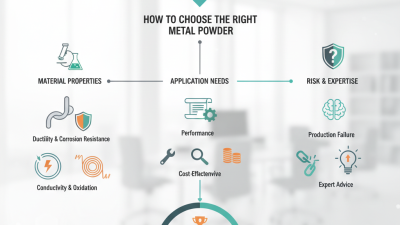
What to Consider When Choosing Metal Powders
Choosing metal powder begins with the finished part and its production process.
A powder that works well in laser powder bed fusion may not suit binder jetting. Match alloy chemistry to strength, corrosion resistance, temperature, and post-processing needs. Then check particle-size distribution, shape, flowability, and apparent density. These properties affect spreading and packing. Small details matter.
Ask for batch-level certificates and test methods, not just a datasheet. Oxygen, moisture, and contamination can influence results, especially in reactive alloys. Check whether the supplier reports particle-size ranges and sampling procedures consistently. ASTM F3049 provides guidance for characterizing metal powders used in additive manufacturing. It is a useful reference, but it does not replace trials on your own equipment.
The Wohlers Report 2024 estimated the global additive manufacturing industry at $20.035 billion in 2023, an 11.1% increase from 2022. That growth makes careful material qualification more consequential, though the figure measures the wider industry, not powder demand alone. Compare lot consistency, packaging, traceability, and technical support alongside price. A practical test is to print a small, representative build and inspect density, surface finish, and mechanical properties. One limitation remains: a successful test does not guarantee identical results across machines or batches.